
Iron chlorosis
Also known as: iron chlorosis, iron deficiency, lime-induced chlorosis, chlorosis, yellow leaves with green veins
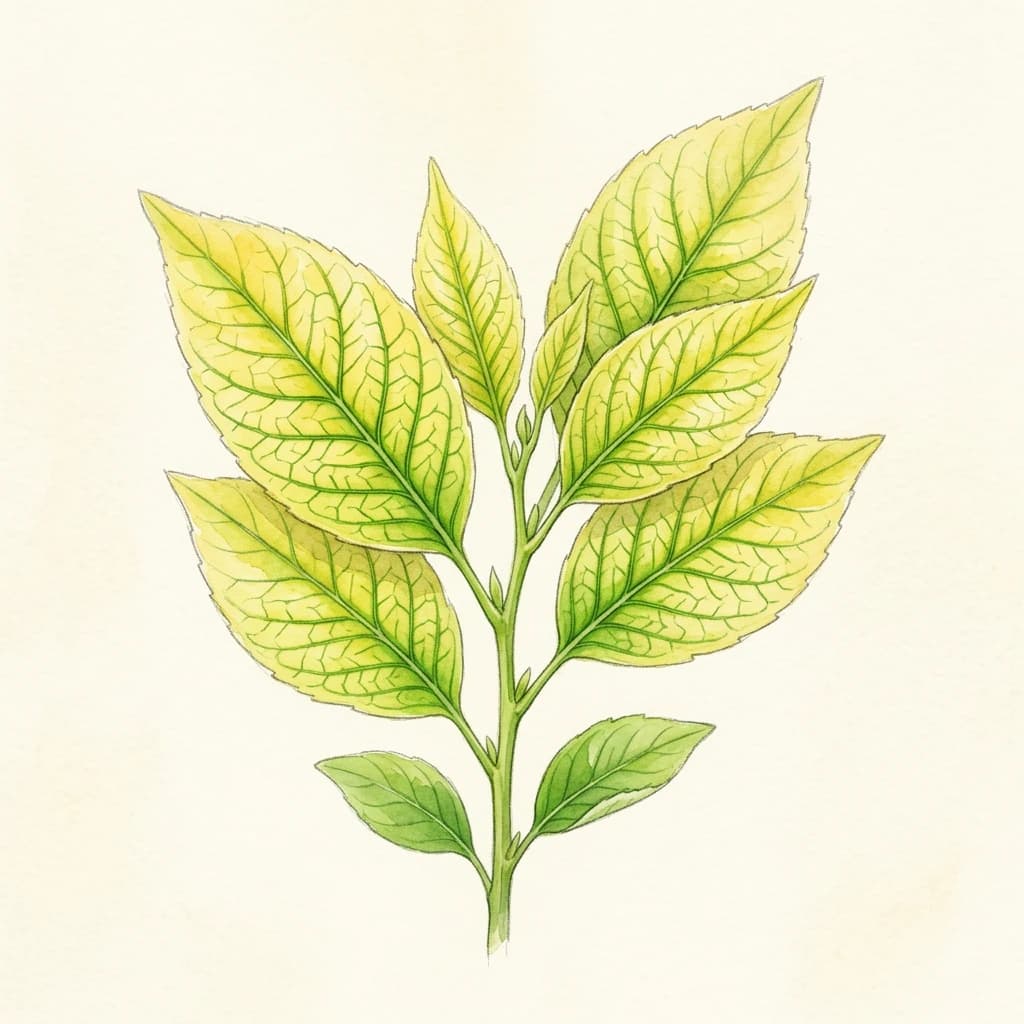
Yellowing of young leaves caused by a lack of available iron, very common on chalky, limestone soils. The veins stay green while the rest of the leaf turns yellow. The first step is to check drainage and apply an iron chelate.

How to recognise it (symptoms)
- Yellow new leaves with veins that are still green, like a net
- It appears first on the shoots and young leaves at the top
- In severe cases the leaf turns almost white and dries at the edges
- Weak growth and lower yields
Crops affected


What favours it
- Limestone soils with a high pH, which lock up iron: the plant turns yellow even when there is iron in the soil
- Waterlogging and compacted soils, because suffocated roots absorb poorly
- Too much lime or phosphorus, or very hard irrigation water, which alter nutrient availability
Prevention
- Improve the soil with organic matter and compost: healthy roots cope better with the problem
- Avoid waterlogging and improve drainage
- On limestone soils, choose lime-tolerant species and rootstocks
- Do not overuse lime or phosphorus
Organic treatment
Always start here: these remedies are kind to the garden, the soil and pollinators.
- First: check that the soil drains well, and apply an iron chelate (EDDHA on very chalky soils), following the label. Check that the product states it is suitable for organic growing
- Dig in plenty of organic matter and well-made compost
- On limestone soils, sulphur barely lowers the pH, because the limestone neutralises it, and coffee grounds do not work either: grow very sensitive plants in pots with ericaceous potting mix
Chemical treatment (with caution)
It is not a pest: it is corrected with iron chelates and by improving the soil, not with plant protection products.
Don't confuse it with…
With nitrogen deficiency, which yellows the old lower leaves first. Iron chlorosis affects the young upper leaves and leaves the veins green.
In-depth guide — iron chlorosis
The leaves turn yellow but the veins stay green: the iron is not reaching the leaf even though it is in the soil. It is very common on Mediterranean chalky soils.
Confirming the symptoms
- Yellowing between the veins on young leaves, not on old ones (this is how to tell it apart from nitrogen deficiency).
- On fruit trees, pale shoot tips in spring.
- Soil with a high pH or visible limestone.
Iron chelates
Apply an iron chelate (EDDHA on very chalky soils) in the irrigation water or onto moist soil. Repeat as directed on the label. The effect shows on the new leaves, not on those that are already yellow.
Improving availability
- Compost and organic matter to keep the roots active.
- Ericaceous potting mix or pine-needle compost for sensitive fruit trees in pots.
- Avoid watering with very hard water and adding lime.
- An organic mulch to keep moisture steady.
Emergency foliar feeds
Ferrous sulphate or a diluted chelate sprayed on the young leaves, at dusk and following the label, gives quick relief. It is only a stopgap: you also have to correct the cause at the root and the pH.
If dark spots appear on the leaves, the dose was too high.
Use plant protection products responsibly, even organic ones. Always read and follow the label, the doses and the harvest interval, and never treat plants in flower or while bees are flying, in order to protect pollinators. If in doubt, put prevention and organic methods first.

In the plant catalogue you'll see what to plant, how and when: a well-tended plant resists pests much better.