
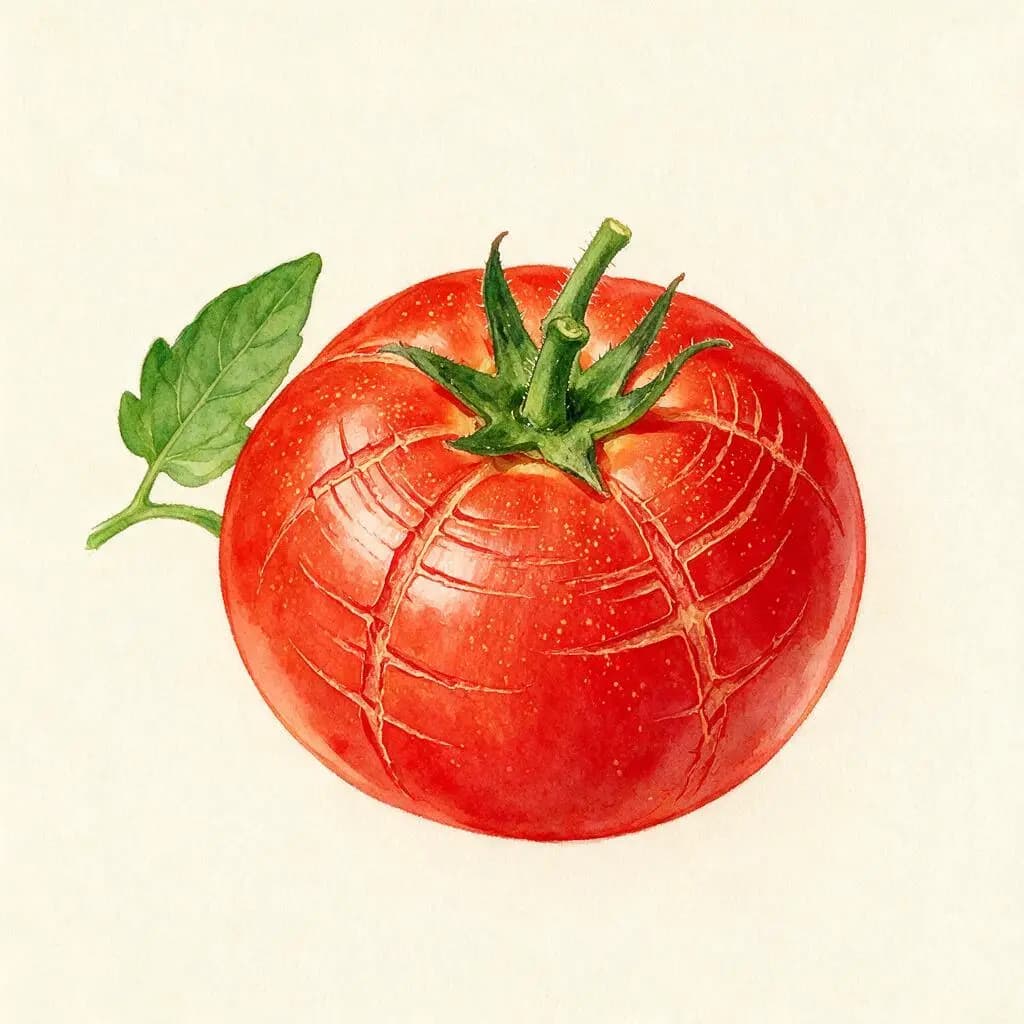
Fruit splitting
Also known as: fruit splitting, fruit cracking, tomato cracking, split tomatoes, cherry cracking
Concentric or radial cracks in the skin of the fruit caused by taking up water suddenly after a dry spell. It is not a disease but a watering problem. The first step is to water regularly and mulch the soil.

How to recognise it (symptoms)
- Circular cracks around the stalk (concentric cracking)
- Radial cracks running from the stalk towards the tip
- They appear after rain or heavy watering following dry days
- The fruit may rot through the crack
Crops affected
 TomatoMarmande tomato, flattened and ribbed, a good size for salads.
 CherryThe Burlat cherry is an early variety with large fruit and a balanced flavour.
 PlumA large, yellow, very juicy and early Japanese plum with a thin skin.
 GrapeA white grape with large, oval berries and a mild muscat flavour.
 WatermelonA large watermelon with a green rind striped in dark green and very sweet red flesh.
What favours it
- Irregular watering, with lots of water after a drought
- Rain after dry spells
- Thin-skinned varieties (cherry tomatoes, cherries), whose skin splits easily
Prevention
- Water regularly and evenly, ideally with drip irrigation
- Mulch with organic matter to cushion changes in moisture
- Harvest ripe fruit before heavy rain is forecast
- Choose varieties less prone to splitting
Organic treatment
Always start here: these remedies are kind to the garden, the soil and pollinators.
- First: correct your watering (regular, ideally drip) and mulch the soil
- Once the fruit has split it will not recover: pick it and eat it soon, or discard it if there is mould
Don't confuse it with…
With bird pecks or hail, which leave irregular wounds rather than circular ones.
In-depth guide — fruit splitting
These are cracks in tomatoes, cherries or plums caused by taking up water suddenly after a drought. Correct the watering and the choice of variety: it is not a primary disease.
Main cause
Very dry soil followed by heavy watering or heavy rain makes the flesh grow faster than the skin. Thin-skinned varieties are more susceptible.
Steady watering
- Regular drip irrigation instead of occasional heavy watering.
- Mulch to cushion the swings.
- In pots, do not let the root ball dry out completely.
Varieties and harvesting
Choose less susceptible varieties if your soil is light and you water by hand. Pick split fruit early, because moulds and insects get in.
Telling it apart from other damage
Radial splitting from the stalk is usually physiological. Concentric spots with rings point to Alternaria or another disease.
Use plant protection products responsibly, even organic ones. Always read and follow the label, the doses and the harvest interval, and never treat plants in flower or while bees are flying, in order to protect pollinators. If in doubt, put prevention and organic methods first.

In the plant catalogue you'll see what to plant, how and when: a well-tended plant resists pests much better.