
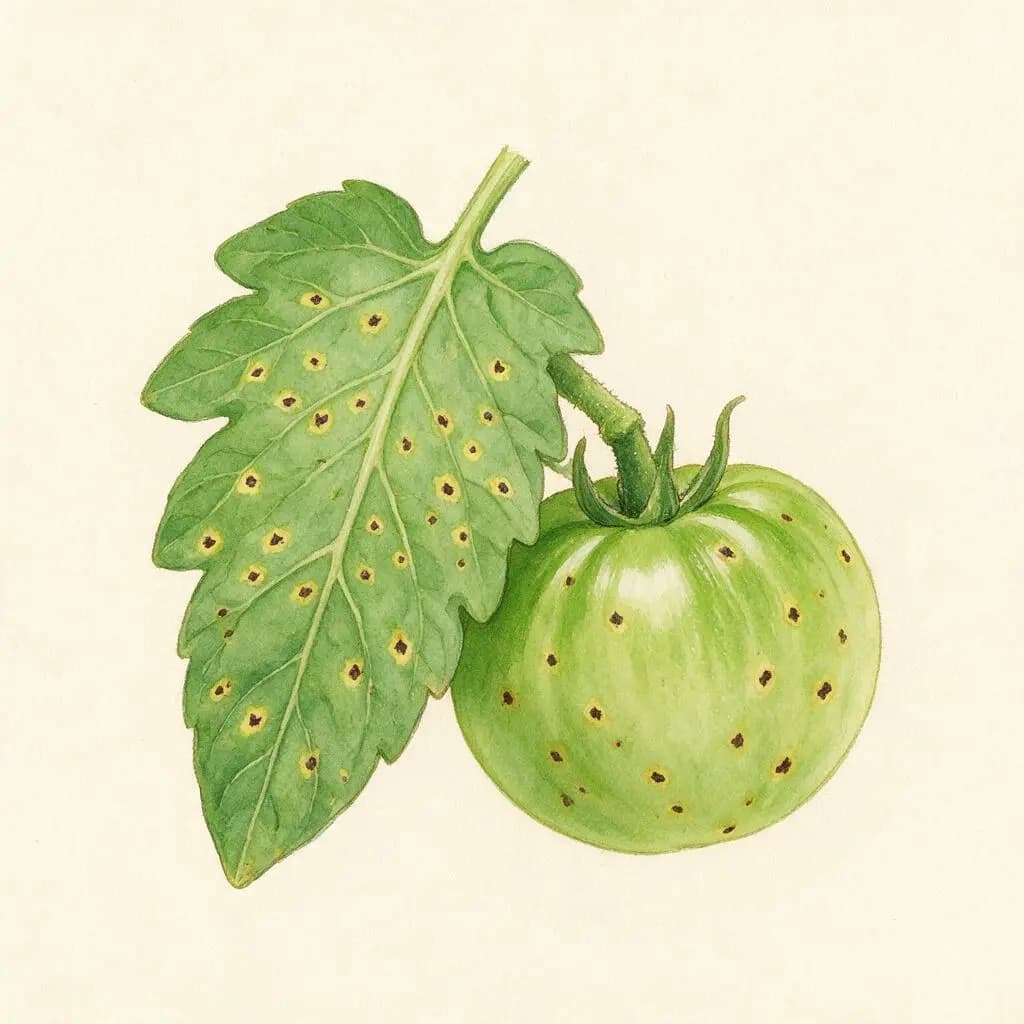
Bacterial spot
Also known as: bacterial spot, bacterial speck, bacterial leaf spot, Xanthomonas, Pseudomonas syringae
Bacteria of the genera Xanthomonas and Pseudomonas that produce small, angular, dark spots on leaves and fruit, with a yellowish halo. They cannot be cured, only prevented. The first step is to stop wetting the foliage and remove the worst-affected leaves.

How to recognise it (symptoms)
- Angular black or brown spots, bounded by the leaf veins
- A yellow halo around the spots
- Hard, dark specks on green fruit, which do not disappear as it ripens
- Rapid leaf drop in damp weather
Crops affected
 TomatoMarmande tomato, flattened and ribbed, a good size for salads.
 PepperCalifornia Wonder pepper, a blocky bell type with thick flesh, for stuffing or eating fresh.
 BeansA dwarf green bean that does not need a support and is easy to grow in a bed.
 PeachA large, late yellow peach, very sweet and firm, which ripens in a protective bag on the tree.
 WalnutThe common walnut is prized for both its nuts and its timber.
What favours it
- Splashes from rain or sprinkler irrigation, which carry bacteria from the soil onto the leaf
- Warm days with high relative humidity
- Contaminated seed
Prevention
- Certified, healthy seed
- Drip irrigation, without wetting the leaves
- A 2-3 year rotation for Solanaceae
- Remove affected crop debris
Organic treatment
Always start here: these remedies are kind to the garden, the soil and pollinators.
- First: remove the worst-affected leaves, stop using sprinklers and avoid handling the plants when they are wet, so as not to spread the bacterium
- Authorised copper, as a preventive treatment after rain or storms, according to the label; it slows the spread, but does not cure
- Bacillus subtilis registered as a preventive, which competes with the bacteria on the leaf surface
Don't confuse it with…
With early blight (spots with target-like rings) or septoria leaf spot (smaller spots with tiny black dots in the centre).
In-depth guide — bacterial spot
These are bacteria (for example, Xanthomonas) that affect tomatoes and peppers. They are often mistaken for fungi: the spots are usually angular and greasy, with a halo.
Diagnosis
Oily-looking spots on leaves and fruit, sometimes with an ooze. They get worse after rain or sprinkler irrigation.
- It can be told apart from powdery mildew (white powder) and downy mildew (grey or brown fuzz on the underside of the leaf).
- Contaminated seed is a common way in: the bacterium arrives with it from day one.
What to do
There is no cure: what works is hygiene, healthy seed and avoiding wetting the foliage.
- Use certified seed.
- Use drip irrigation and remove badly affected leaves.
- Rotate for 2-3 years without Solanaceae in the same bed.
Use plant protection products responsibly, even organic ones. Always read and follow the label, the doses and the harvest interval, and never treat plants in flower or while bees are flying, in order to protect pollinators. If in doubt, put prevention and organic methods first.

In the plant catalogue you'll see what to plant, how and when: a well-tended plant resists pests much better.