
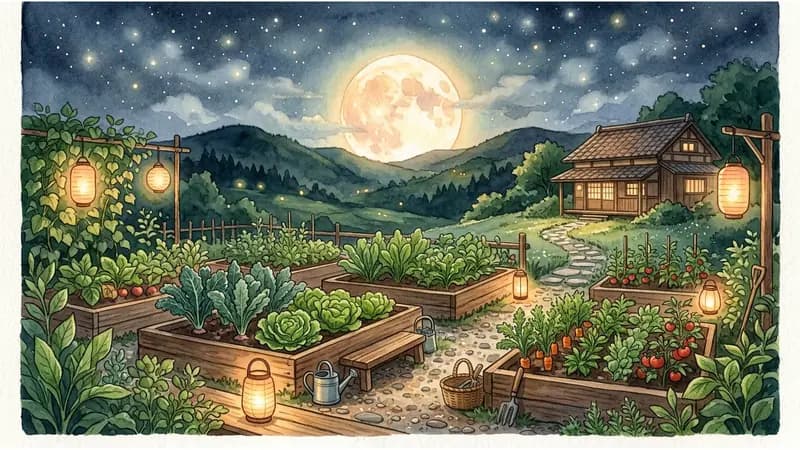
Cultural curiosity
Sowing by the moon
See today’s phase and what lunar tradition says for each moment. A word of caution: this is tradition and a working rhythm, not a scientific recipe — what really decides what to plant each month is the sowing calendar for your climate zone.
We keep this tool as a cultural curiosity and an aid for anyone who likes to organise their work by lunar phases, but science does not confirm that the Moon affects crops. Further down you will find an honest summary of what is proven and what is tradition.
Today · 24 November
Full moon
Said to favour carrot, beetroot, potato, garlic, onion and transplanting root crops.
Full moon: harvest leaves and fruit to eat fresh. Avoid sowing and heavy pruning.
Next full moon
22 December
in 28 days
Next new moon
7 December
in 13 days
The sap rises: favours the parts above ground
Waxing moon
During the waxing moon (new to full), tradition says the sap rises towards the leaves, stems and fruit.
A good time for
- Sowing leafy and fruiting vegetables (lettuce, spinach, chard, tomato, pepper, courgette).
- Transplanting plants you grow for their parts above ground.
- Grafting and taking cuttings: they are said to root and sprout more vigorously.
- Harvesting leaves and fruit to eat fresh (juicier and more aromatic).
- Watering and foliar feeding: said to be better absorbed.
Better to avoid
- Heavy pruning (the plant is said to bleed more sap).
- Sowing roots or tubers if you want the biggest possible roots.
November 2026
How the moon affects plants: what science says
 How the moon affects plants: what science says
The short answer: controlled trials find no reproducible effect of the lunar phase on germination or harvests. What really matters is temperature, soil moisture, sunlight, soil type and variety. So this calendar is tradition and a working rhythm, not a scientific recipe. We still keep it because it does no harm and many people find it useful for getting organised. Here is the detail, mechanism by mechanism:
Gravity and sap “tides”
The Moon does cause the sea tides with its gravity, but that force acts on enormous bodies of water (entire oceans). On the water inside a plant or a bed, the tidal force is tiny: millions of times weaker than that of watering, evaporation or the wind. No one has ever measured a real sap “tide” inside a plant.
Implausible mechanismFull moon light
A full moon gives about 0.1–0.3 lux: thousands of times less than a sunrise. That is far too little light for photosynthesis or for almost any photoperiod-driven flowering response. In the lab, some seeds that are very sensitive to light (through phytochrome) can pick up faint flashes, but in a real vegetable garden the effect on germination is negligible.
A real effect, but negligibleThe plant's internal clock
Plants have a biological (circadian) clock set by the Sun, not the Moon. Rhythms of about 24 hours are very well established; the roughly 29.5-day “lunar” rhythms proposed in some classic experiments, however, have not been reliably reproduced.
No solid evidence of a lunar clockWhat sowing trials show
Controlled studies comparing sowing in different phases — including biodynamic farming and Maria Thun’s calendars — generally find no reproducible differences in germination or yield once the other factors are controlled. What does matter, by a wide margin, is temperature, soil moisture, sunlight, soil quality and variety.
No robust agronomic basisSo what is this calendar for?
As a cultural and organisational guide: it gives you a working rhythm, connects you with a centuries-old tradition and does no harm (sowing “in phase” will not hurt your crop). But if something goes wrong, the cause is almost never the Moon: check the watering, the weather and the soil. That is why we offer it as a complement to the climate-zone calendar, which is the one that really decides what suits you to plant each month.
Next we explain what tradition says for each phase and cycle, in case you would like to follow it as a way of organising your work.
What is sown (and done) in each phase, according to tradition
 What is sown (and done) in each phase, according to tradition
The traditional idea is simple: from new moon to full moon the light grows and the sap is said to “rise” towards leaves and fruit; from full moon to new moon the light fades and the sap “sinks” towards the roots. On that basis, each moment has its own jobs. This is what the lunar calendar suggests for each one:
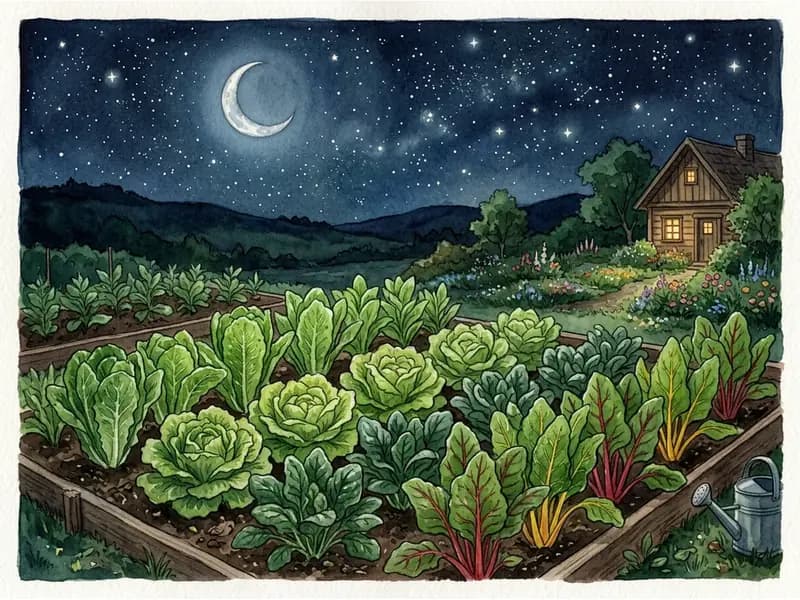
Waxing — leaf
New moon to first quarter · sap rising
Sowing seeds of plants you grow for their LEAVES: said to grow quickly and lushly.
- Lettuce, spinach, chard, rocket, lamb's lettuce
- Cabbages, broccoli, cauliflower, celery
- Leafy herbs: parsley, basil, coriander, chives
- A good moment to germinate seed in seed trays
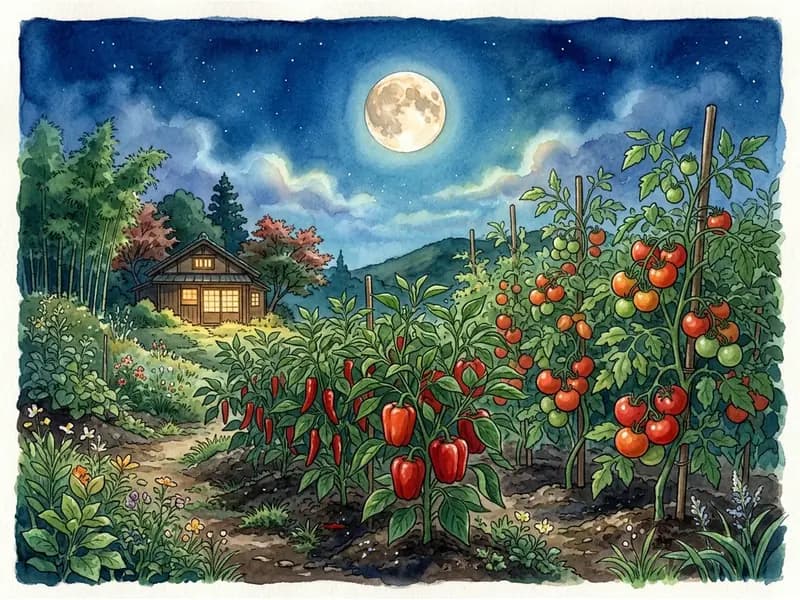
Waxing — fruit
First quarter to full moon · strongest upward push
Sowing plants you grow for their FRUIT or seed, and propagation jobs.
- Tomato, pepper, aubergine, courgette, cucumber, melon
- Beans, peas, broad beans, sweetcorn, strawberries
- Cuttings and grafts (said to take better)
- Picking fruit and herbs to eat fresh
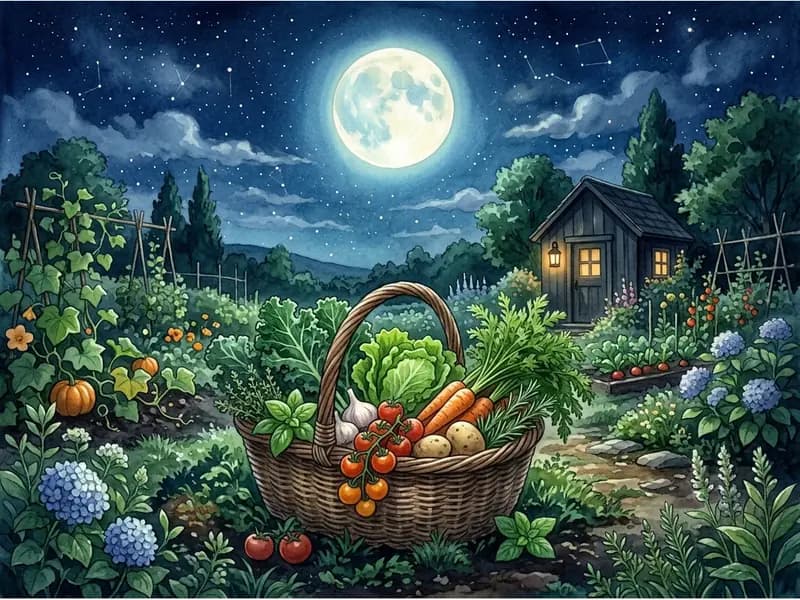
Full moon
Peak of light
More about harvesting than sowing: tradition avoids sowing right at full moon for fear that plants will bolt.
- Harvesting fruit and seed for keeping
- Gathering aromatic and medicinal plants
- Watering and feeding; collecting ripe seed
- A moment of transition towards the waning moon
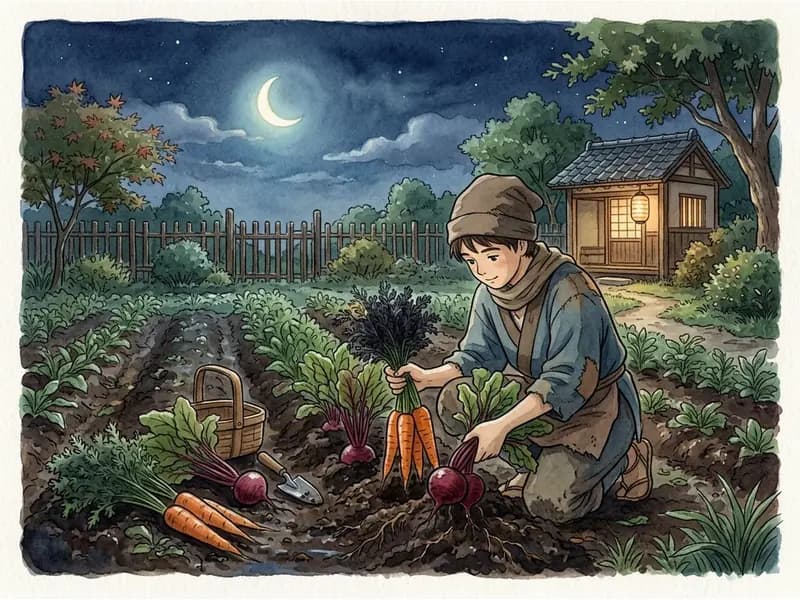
Waning — roots and seedlings
Full moon to new moon · sap sinking to the roots
Sowing ROOT crops and bulbs, TRANSPLANTING seedlings (better rooting) and soil work.
- Carrot, radish, beetroot, turnip, potato
- Garlic, onion, leek and other bulbs
- Transplanting seedlings: they root with less stress
- Pruning (less sap loss), feeding, hoeing and making compost
An easy rule to remember
What grows upwards (leaf and fruit) is sown under a waxing moon. What grows downwards (roots and bulbs), plus transplanting and pruning, goes under a waning moon. If in doubt, look at the card above: it tells you what today suggests for the garden.
The moon’s other cycles
Besides the synodic cycle (waxing/waning) that everyone knows, the biodynamic calendar and garden tradition use three other cycles that overlap with it. They are the same ones found in calendars such as latanina.com or Michel Gros’s Lunario (both in Spanish). Here is what they are and what is done in each.
Ascending moon
Sidereal cycle · ~13.6 days up
Each day the moon appears higher in the sky. Tradition says the sap rises and favours the parts above ground. Not to be confused with “waxing”.
- Sowing leaf and fruit crops in their element (biodynamics).
- Picking juicy fruit and herbs to eat fresh.
- Grafting and taking cuttings: said to take better.
- In the southern hemisphere the cycle is reversed.
Descending moon
Sidereal cycle · ~13.6 days down
Each day the moon sets lower. The sap is said to sink, favouring roots, soil and everything that grows underground.
- Sowing and transplanting roots, bulbs and seedlings.
- Pruning (less sap is lost).
- Digging, feeding, making compost and working the soil.
- Harvesting for storage (roots, garlic, onions).
Apogee and perigee
Anomalistic cycle · ~27.55 days
The Earth-Moon distance varies between ~356,500 km (perigee) and ~406,700 km (apogee). At perigee, biodynamics advises NOT doing heavy work.
- Perigee considered a disturbed moment: rest.
- Apogee lunar effects weakened, neutral jobs.
- Changes in distance also alter the tides.
- On today's card above you will see the exact state.
Fruit, root, leaf or flower days
Sidereal constellation · Maria Thun
Each day the moon crosses a constellation with an associated element (fire, earth, air, water). Each element is said to favour a type of plant.
- Fire fruit and seed (tomato, pepper, strawberry).
- Earth root (carrot, beetroot, potato, garlic).
- Water leaf (lettuce, spinach, cabbage, parsley).
- Air flower (flowering herbs and cut flowers).
Remember: these cycles are tradition, not a recipe with a solid agronomic basis (see “what science says” above). The “Today” card tells you, in real time, where you are in each of these cycles in case it helps you get organised.
Combine it with your climate zone
The moon gives you the fine timing; the climate tells you what to sow this month. Check it in the sowing calendar.
Sources and further reading
 Sources and further reading
For the practical calendar and the ascending/descending, apogee/perigee and node cycles, we cross-checked classic biodynamic calendars with standard astronomy (Meeus). Here are the main sources if you want to dig deeper (most are in Spanish):
- latanina.com Lunar garden calendar, very practical, with a guide by task and by plant (in Spanish).
- Lunario · Michel Gros Lunar calendar for organic gardening with all the cycles (synodic, sidereal, anomalistic and nodes) (in Spanish).
- Muscaria · Michel Gros's Lunario An edition of the Lunario explaining how to read it by hemisphere (in Spanish).
- Jardineriaon · Biodynamic guide A good introduction to the biodynamics of Rudolf Steiner and Maria Thun (elements, constellations and perigee/apogee) (in Spanish).
- iCalendario · Lunar gardening Monthly calendar with nodes, perigees and apogees day by day (in Spanish).
- Wikipedia · Biodynamic agriculture (scientific status) A summary of meta-analyses and controlled trials. Recommended as a counterpoint.
Sowing by the moon is a widespread folk tradition, but the scientific evidence is scant and inconclusive. Take it as a cultural and organisational guide, not a strict rule: climate, soil and variety matter far more.