

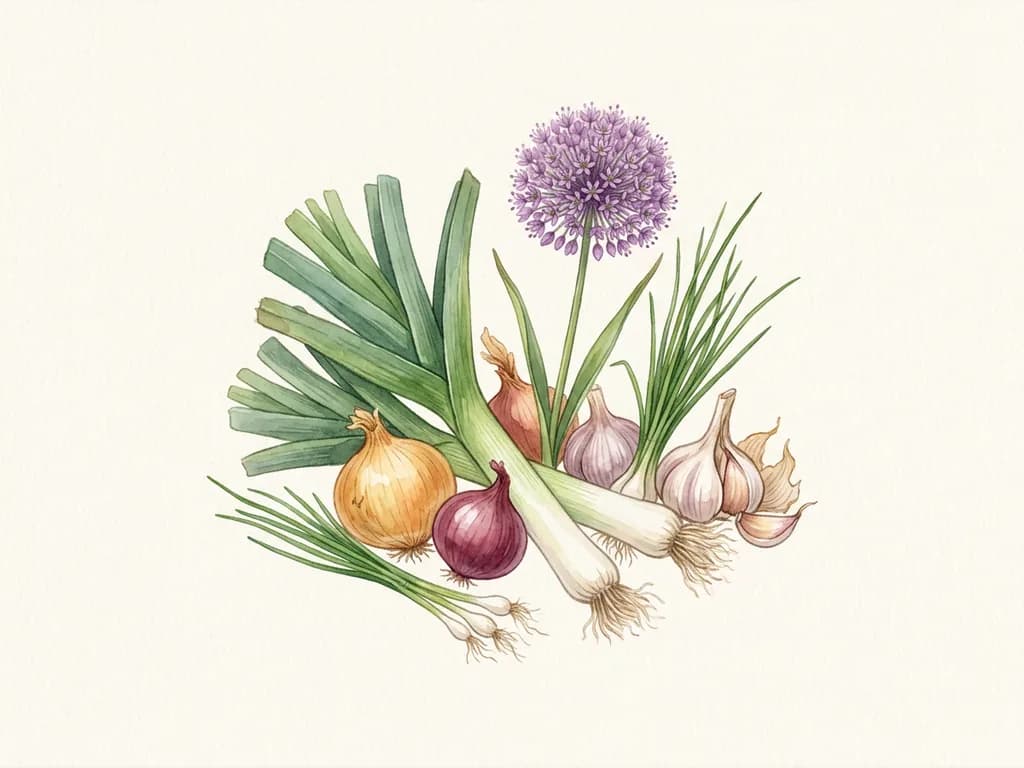
Botanists now place them within the amaryllis family (Amaryllidaceae). They form a bulb or a false stem, have a characteristic smell and share pests and diseases such as onion fly, rust and downy mildew, so they are rotated together.
They are toxic to dogs and cats, raw or cooked.