
Compost / humus Solid Liquid
Worm castings (vermicompost)
Also called: worm castings, vermicompost, worm compost, wormery compost, worm humus, earthworm castings
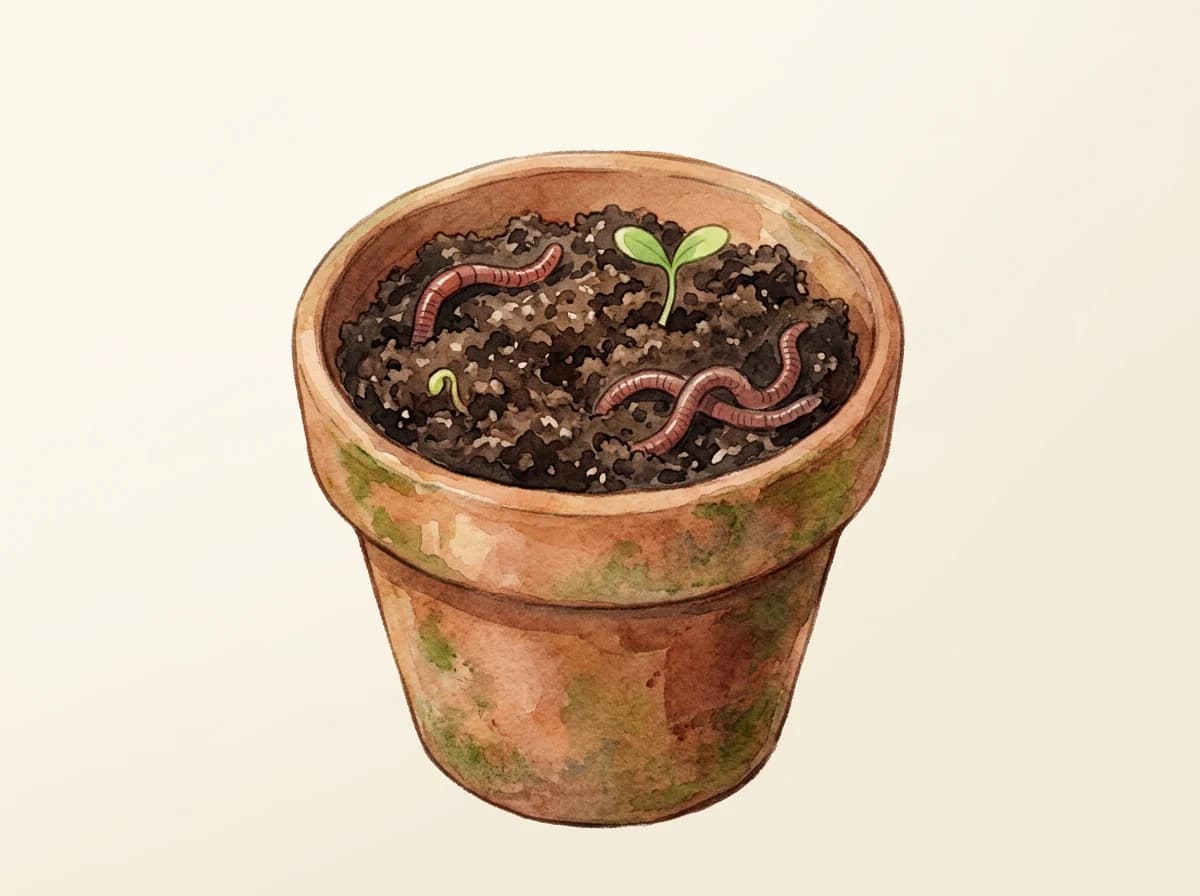
Compost produced by red worms (vermicompost). It is concentrated: it provides useful microbes and nutrients in small amounts, so only a little is used each time.
N
1-2 %
Nitrogen
P
1-1.5 %
Phosphorus
K
1-1.5 %
Potassium
Good-fertiliser rule of thumb. Put organic matter first and use half the dose printed on the label. A garden is spoiled faster by over-feeding than by under-feeding.
What it provides
- Substances that stimulate root growth, such as humic acids
- A large number of beneficial microorganisms
- Enzymes
- Calcium, magnesium and iron in an easily absorbed form
When to use it
- At every transplanting (mixed into the planting hole): the new root finds starter nutrients right where it grows.
- In seed trays, mixed with part of the growing medium: it provides slow-release nutrients without burning tender seedlings.
- As a top dressing every 4-6 weeks, on hungry crops.
- The liquid that drains from the wormery (leachate), heavily diluted, to water the growing medium of weak plants.
How to make or apply it
- A stacked-tray wormery gives you, separately, the solid castings and the liquid that drains off, and the worms move up to the new tray by themselves.
- Red worms (Eisenia fetida) are used. In 3-4 months you have castings ready to harvest.
Dose
- Seed tray: 10-20 % of the total growing medium; more than that can burn tender seedlings.
- Transplanting: 1 handful at the bottom of the hole.
- Top dressing: 100-200 g/m² every 6 weeks: it replaces what the crop uses up during active growth.
- Drained liquid: dilute it at least 1:10 in water and use it when watering every 15 days. It is not a compost tea, it may be unoxygenated: if it smells rotten, throw it away, and do not spray it on leaves or on fruit that will be eaten raw.
Good for…
All hungry crops.Young plants: it reduces transplant stress.Tomato, pepper, strawberry, potted citrus.
Precautions
- It is concentrated: stick to the doses so you do not burn young roots.
- Keep it slightly moist, in the shade and in a bag or container that is not airtight: if it dries out completely it loses some of its microbial life, and if it becomes waterlogged it rots.
Sustainability: Excellent. It recycles waste and produces more fertiliser from less volume.
Make your own compost
The best organic fertiliser is made at home from what you would otherwise throw away. Learn to make good compost step by step.