
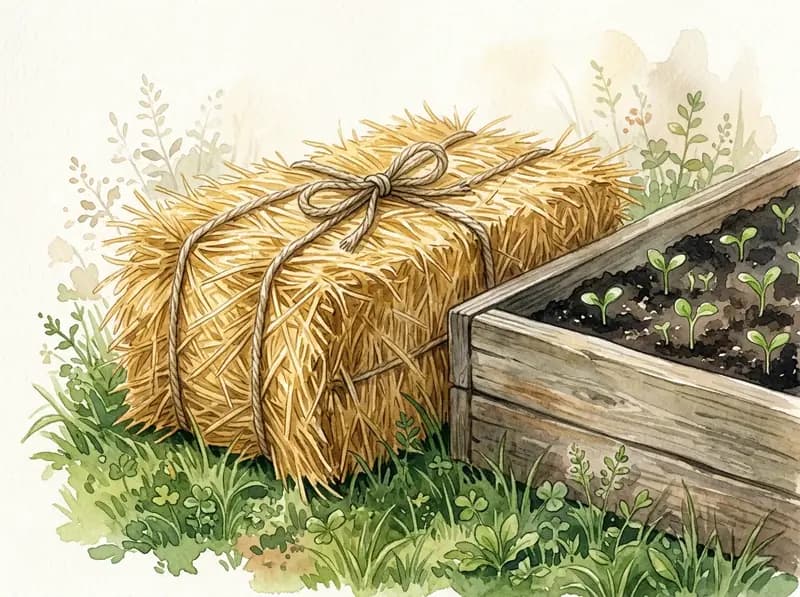
Mulch Top dressing
Straw mulch
Also called: straw mulch, straw, garden straw, mulching straw, organic mulch, wheat straw mulch
It is not a fertiliser in itself, but as it breaks down it feeds soil life, keeps moisture in, reduces evaporation and holds back weeds.
N
0.5 %
Nitrogen
P
0.2 %
Phosphorus
K
1 %
Potassium
Good-fertiliser rule of thumb. Put organic matter first and use half the dose printed on the label. A garden is spoiled faster by over-feeding than by under-feeding.
What it provides
- Carbon that feeds the soil's microorganisms
- Retains moisture
- Holds back weeds
- Softens changes in soil temperature
When to use it
- Spring and summer: a layer of 5-8 cm (2–3.1 in) around the plants.
- Winter: a layer of 10-15 cm (3.9–5.9 in) over resting beds.
How to make or apply it
- Use wheat, barley or oat straw, preferably organic or of known origin, because residues of some herbicides can harm what you plant on top.
- Choose straw and not hay: hay often brings in lots of grass seeds that then come up in the bed.
Dose
- 5-8 cm (2–3.1 in) around the crops, without pushing it up against the stem: it retains moisture without smothering the plant or inviting rodents.
- 10-15 cm (3.9–5.9 in) on beds resting over winter: it protects the soil from cold and from nutrient loss by leaching.
Good for…
Strawberries, because it stops the fruit touching damp soil and rotting.Tomato.Long-cycle crops.
Precautions
- If the straw comes from a crop treated with persistent herbicides, it can harm the plants in the bed for months: ask about its origin.
- If you mix it into the soil, it uses up nitrogen as it breaks down; spread on the surface the effect is small. If you see pale leaves, add compost or nettle liquid feed.
Sustainability: Very good if it is of local origin. It is advisable to make up for the biomass taken from the field with compost.
Make your own compost
The best organic fertiliser is made at home from what you would otherwise throw away. Learn to make good compost step by step.