
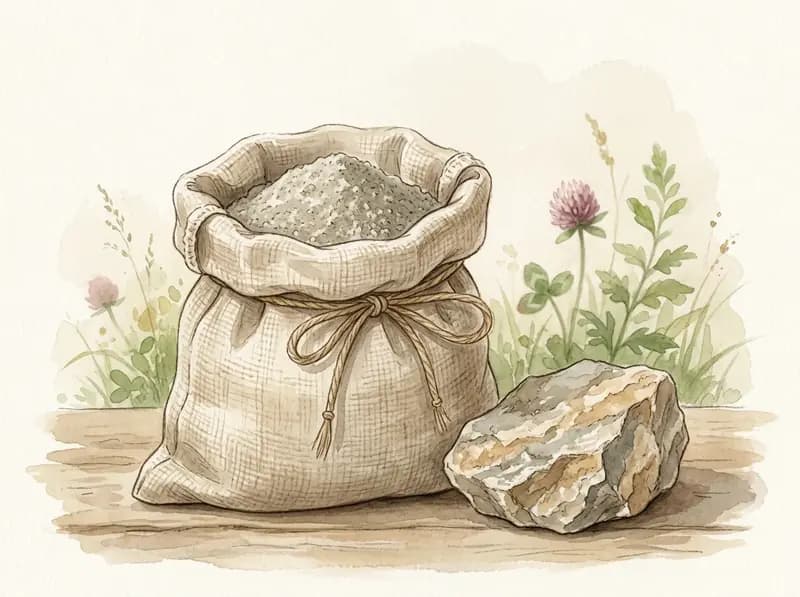
Ground rock phosphate
Also called: rock phosphate, ground rock phosphate, natural phosphate, phosphate rock, raw rock phosphate, mineral phosphorus
A mineral source of phosphorus with very slow release, intended for base soil amendments for long-cycle crops (fruit trees, asparagus, artichoke). It is the non-animal alternative to bone meal and performs better in acid soils.
Good-fertiliser rule of thumb. Put organic matter first and use half the dose printed on the label. A garden is spoiled faster by over-feeding than by under-feeding.
What it provides
- Slow-release phosphorus
- Calcium
- Mineral micronutrients
When to use it
- Soil preparation before planting fruit trees or asparagus.
- Every 3-4 years, mixed into the soil: it releases phosphorus so slowly that it does not need repeating every year.
How to make or apply it
- It is sold ground into a powder or granulated. Mix it in well with the soil and choose a product approved for organic farming and low in cadmium.
Dose
- Base soil amendment: 100-150 g/m² every 3-4 years.
- Planting hole for a fruit tree: 200-300 g (7.1–10.6 oz) mixed with the soil.
Good for…
Precautions
- It is very slow-release: do not expect an immediate effect; it serves to enrich the soil in the medium term.
- In chalky or alkaline soils it barely dissolves and gives little benefit: there it is better to improve the soil with compost and not count on it.
Sustainability: Acceptable: it is a mineral extracted from mines, so it is best to choose nearby origins and products approved for organic.
The best organic fertiliser is made at home from what you would otherwise throw away. Learn to make good compost step by step.