
Plant liquid feed Liquid
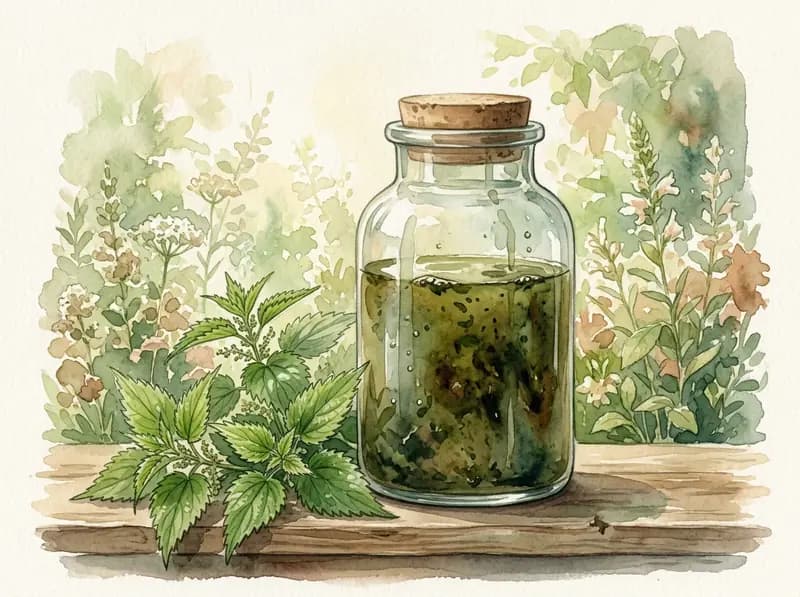
Nettle liquid feed (nettle tea)
Also called: nettle tea, nettle feed, nettle fertiliser, nettle fertilizer, nettle liquid feed, fermented nettle, nettle manure
A home-made liquid fertiliser, known above all for its nitrogen content. It is made in about two weeks with water and nettles and used heavily diluted to encourage leafy growth.
N
low and highly variable
Nitrogen
P
low
Phosphorus
K
variable
Potassium
Good-fertiliser rule of thumb. Put organic matter first and use half the dose printed on the label. A garden is spoiled faster by over-feeding than by under-feeding.
What it provides
- Fast-absorbing nitrogen: it pushes leafy growth within a few days, but it must be diluted so it does not burn
- Iron and magnesium
- Some potassium and other minerals; the concentration varies a lot from one batch to another
- Its effect against aphids and fungi is not proven: do not treat it as a plant protection product
When to use it
- Spring and early summer, during full leaf and stem growth.
- When plants stay small or turn yellowish from a lack of nitrogen.
- Not during full flowering or fruiting: too much nitrogen gives more leaf and less fruit.
How to make or apply it
- Use 1 kg (2.2 lb) of fresh nettles for every 10 L (about 2.6 US gal) of water, rainwater if possible, and pick them before they set seed.
- Prepare it in a bucket or drum that is not metal, because metal rusts with the fermentation. Cover it without closing it completely and stir it every day: this lets oxygen in and it smells less.
- Leave it to ferment for 10 to 15 days, depending on the heat, until it stops bubbling. It smells very bad. Then strain it.
- Keep the strained liquid in covered containers, in a cool, shaded place, and use it within a few weeks.
Dose
- Watering: 1 part feed to 10 of water (1:10), once every 10-15 days while the plant is growing.
- Spraying on the leaves is optional and less recommended: if you try it, 1 part to 20 of water, first on just a few leaves, outside sunny hours and never on vegetables that will be eaten raw.
- Never use it undiluted: it burns roots and leaves.
Good for…
Young tomato, cabbages, lettuces and courgette (zucchini) while growing.
Precautions
- It smells very bad while fermenting: prepare it away from windows and neighbours, in a ventilated corner of the garden.
- Avoid it during full flowering and fruiting, and on legumes (they fix their own nitrogen) and on onions and garlic close to harvest.
Sustainability: Excellent: nettles are plentiful, cost nothing and grow where other plants do not reach.
Make your own compost
The best organic fertiliser is made at home from what you would otherwise throw away. Learn to make good compost step by step.