
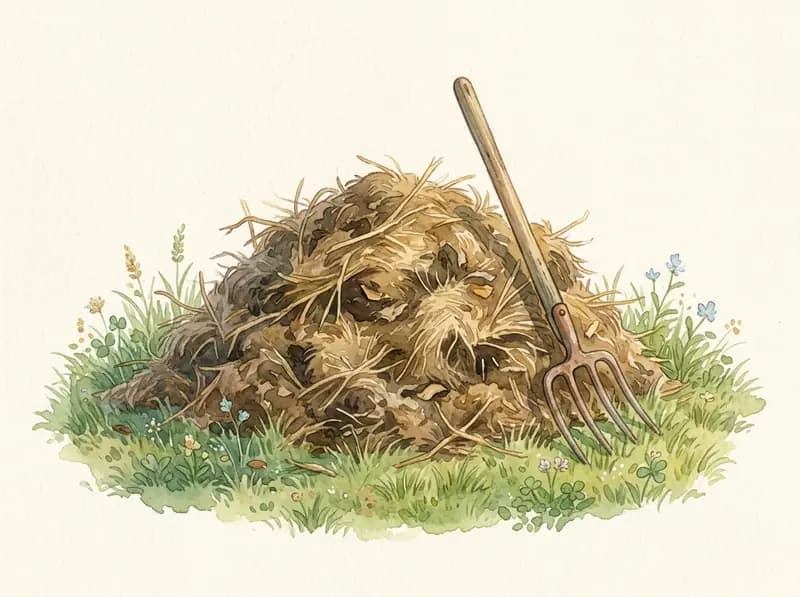
Animal manure Solid
Horse manure
Also called: horse manure, horse muck, stable manure, equine manure, well-rotted horse manure, horse dung
The classic vegetable-garden manure. It is rich in carbon (from the straw bedding) and gives off heat as it ferments, so it works for hot beds for seedlings. For the bed, always use it well rotted (more than six months).
N
0.6 %
Nitrogen
P
0.3 %
Phosphorus
K
0.5 %
Potassium
Good-fertiliser rule of thumb. Put organic matter first and use half the dose printed on the label. A garden is spoiled faster by over-feeding than by under-feeding.
What it provides
- Organic matter and structure thanks to the straw bedding: it improves aeration and water retention
- Slow-release nitrogen: it feeds without spikes that soften tissue and attract aphids
- Thermophilic bacteria that heat the bed: useful for winter seedlings if the heap is well aerated
When to use it
- Autumn: mix it into the soil when preparing beds for spring.
- In hot beds for seedlings, in January-February: fresh manure generates heat as it ferments and helps germination, always under a layer of soil where you sow.
- Never fresh on crops or next to roots: it burns them and brings in weed seeds.
How to make or apply it
- Heap it in the shade and leave it at least six months, until it smells like woodland and not like horse.
- Turn it 2-3 times during the process: this aerates it, mixes it and avoids the oxygen-free pockets that smell bad and lose nitrogen.
- To speed it up, mix it with plant waste and compost it.
Dose
- Base feed: 1-2 kg/m² a year, or 3-4 kg/m² every two years. It provides a base of organic matter without overloading the soil.
- Hot bed: about 30 cm (11.8 in) of manure with 20 cm (7.9 in) of soil on top.
Good for…
Beds for hungry crops: tomato, pumpkin, courgette (zucchini).Also for preparing the soil for fruit trees: it provides structure and base nutrients before planting.
Precautions
- Ask whether the horses were recently wormed (wormers pass into the manure and harm earthworms) and whether the straw or grazing had persistent herbicides, which can affect tomato, potato or bean for months.
- Fresh, it burns plants and brings in oat, barley and other grass seeds that come up everywhere.
- Uncomposted manure can carry E. coli or Salmonella: if you are not sure it was composted properly, leave at least 120 days between application and harvest of vegetables that touch the soil (lettuce, carrot) and 90 days for those that do not.
Sustainability: It is a good option if it comes from a small, nearby stable; it is best to avoid industrial operations.
Make your own compost
The best organic fertiliser is made at home from what you would otherwise throw away. Learn to make good compost step by step.