
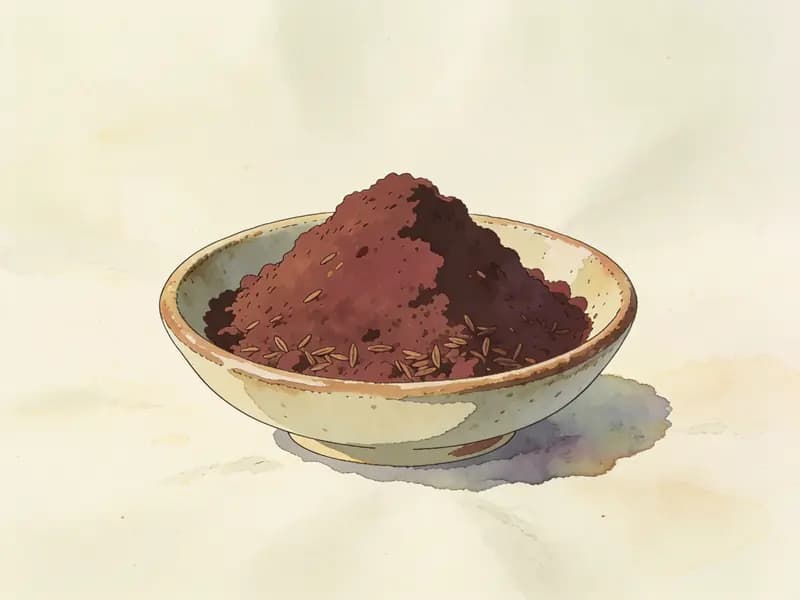
Dried blood
Also called: dried blood, blood meal, dried blood fertiliser, dried blood fertilizer, blood fish and bone, slaughterhouse blood
It is one of the most concentrated nitrogen sources among those permitted in organic farming. It acts fast and is used to correct a clear lack of nitrogen. It is best used sparingly; if you prefer to avoid animal origin, you can turn to nettle liquid feed.
Good-fertiliser rule of thumb. Put organic matter first and use half the dose printed on the label. A garden is spoiled faster by over-feeding than by under-feeding.
What it provides
- Fast, concentrated nitrogen
- Amino acids
When to use it
- Crops with a clear nitrogen deficiency (yellow lower leaves, small plant).
- Fast-growing, hungry crops, such as cabbages, pumpkin and sweetcorn.
How to make or apply it
- It is sold as a powder or granulated. It is spread over the soil, lightly mixed in with the soil and watered so the nitrogen reaches the roots.
Dose
- 30-50 g/m², sprinkled, lightly mixed with the soil and watered in. Do not exceed that amount so as not to burn roots.
- At transplanting, one tablespoon well mixed with the soil in the hole, without it touching the root directly.
Good for…
Precautions
- It is very concentrated: if you overdo the dose, it burns roots. Try it first on a few plants.
- It attracts dogs and foxes by its smell and eating it can upset their stomachs: bury it well or cover it with compost so they do not dig it up.
- It is of animal origin; the simplest alternative without that origin is nettle liquid feed.
Sustainability: Debatable: it is a slaughterhouse by-product, used instead of thrown away, but there are plant-based alternatives.
The best organic fertiliser is made at home from what you would otherwise throw away. Learn to make good compost step by step.