
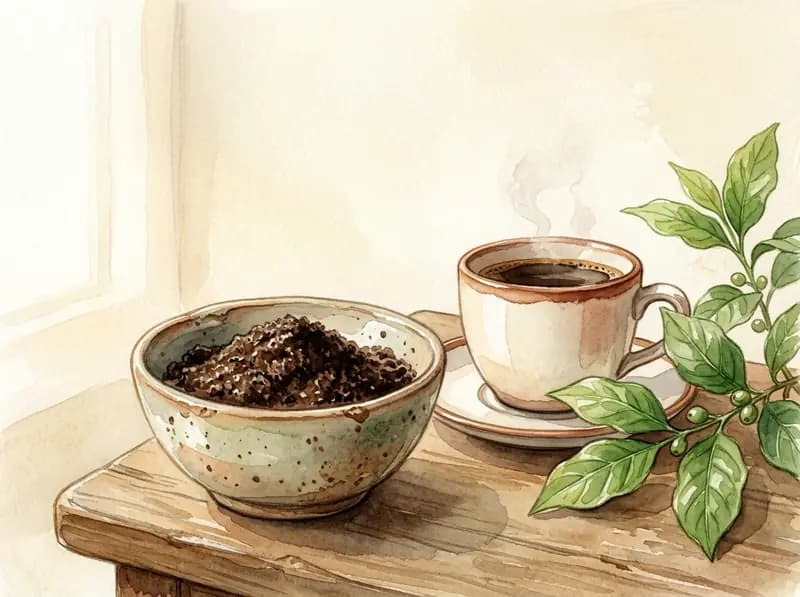
Household waste Solid Top dressing
Coffee grounds
Also called: coffee grounds, used coffee grounds, spent coffee grounds, coffee waste, coffee compost, coffee fertiliser, coffee fertilizer
Coffee grounds contain nitrogen and organic matter. Once used they are almost neutral, so they do not work for acidifying the soil. They go well in compost; in the soil, only as a thin layer, because they pack down.
N
2 %
Nitrogen
P
0.3 %
Phosphorus
K
0.3 %
Potassium
Good-fertiliser rule of thumb. Put organic matter first and use half the dose printed on the label. A garden is spoiled faster by over-feeding than by under-feeding.
What it provides
- Nitrogen
- Organic matter that feeds soil life
When to use it
- In the compost bin, as a "green" material: its nitrogen balances the dry material and helps the heap heat up.
- As a very thin top dressing on established plants, preferably covered with mulch or mixed into the soil.
How to make or apply it
- Spread them on a tray and let them dry completely before storing: damp, they go mouldy within a few days.
- Keep them in a ventilated container in a dry place.
Dose
- Directly on the soil: a thin layer, less than half a centimetre, every 4-6 weeks.
- In compost: up to about one fifth of the total volume, always mixed with dry material.
Good for…
Leafy vegetables, roses and established fruit trees.Compost, which is where they perform best.
Precautions
- They pack down if the layer is thick: always mix them with leaves or straw. Do not put them on seed trays or seedlings, because they can hold back germination.
- Use only plain coffee; grounds with milk or sugar rot and attract flies.
- They contain caffeine, which is toxic to dogs and cats if they eat a lot of it: do not leave it within their reach.
Sustainability: Very good: you recover a waste product you produce every day.
Make your own compost
The best organic fertiliser is made at home from what you would otherwise throw away. Learn to make good compost step by step.