
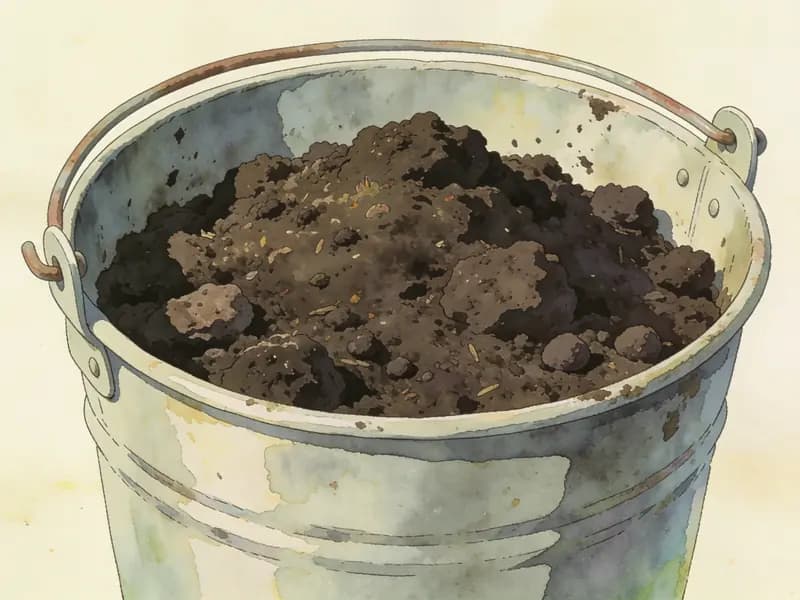
Animal manure Solid
Chicken manure
Also called: chicken manure, poultry manure, chicken poo, hen manure, composted chicken manure, chicken manure pellets, chicken droppings
The manure richest in nitrogen and phosphorus. It is good for getting hungry crops going, but it is very concentrated: misused, it burns plants and unbalances the soil.
N
1.5-2 %
Nitrogen
P
1.5 %
Phosphorus
K
0.8 %
Potassium
Good-fertiliser rule of thumb. Put organic matter first and use half the dose printed on the label. A garden is spoiled faster by over-feeding than by under-feeding.
What it provides
- A lot of fast-acting nitrogen
- Phosphorus (P)
- Some calcium
When to use it
- Always use it composted, never fresh: fresh manure burns roots and releases ammonia that harms seedlings.
- In autumn, on beds that will go to cauliflower, broccoli or pumpkin, which are greedy crops and make use of the nitrogen.
- In spring, only in small top-dressing doses: it is very concentrated and an excess makes the soil salty.
How to make or apply it
- Compost it for four to six months mixed with straw or sawdust, which provide the carbon that such a nitrogen-rich manure lacks.
- If you buy it dried and bagged (composted), it can be used in moderation.
Dose
- Base feed: up to 1 kg/m² a year, already composted. It is very concentrated and you should not overdo it.
- Dry top dressing: 50-100 g/m² around hungry plants.
Good for…
Cabbages, broccoli, pumpkins, sweetcorn, tomato.
Precautions
- Fresh, it burns roots and releases ammonia: compost it or let it mature for several months before putting it in contact with plants.
- In excess it makes the soil salty: alternate with compost so salts do not build up and the structure is kept.
- If you keep chickens, put their manure straight into the compost bin along with plant waste and use it when the compost is ready.
- It may carry Salmonella and E. coli: wear gloves, wash your hands and, if you are not sure it was properly hot-composted, leave 120 days between application and harvest of vegetables that touch the soil (90 days for those that do not).
Sustainability: It is a good option if it comes from your own chickens or a small coop; it is best to avoid industrial chicken manure.
Make your own compost
The best organic fertiliser is made at home from what you would otherwise throw away. Learn to make good compost step by step.