
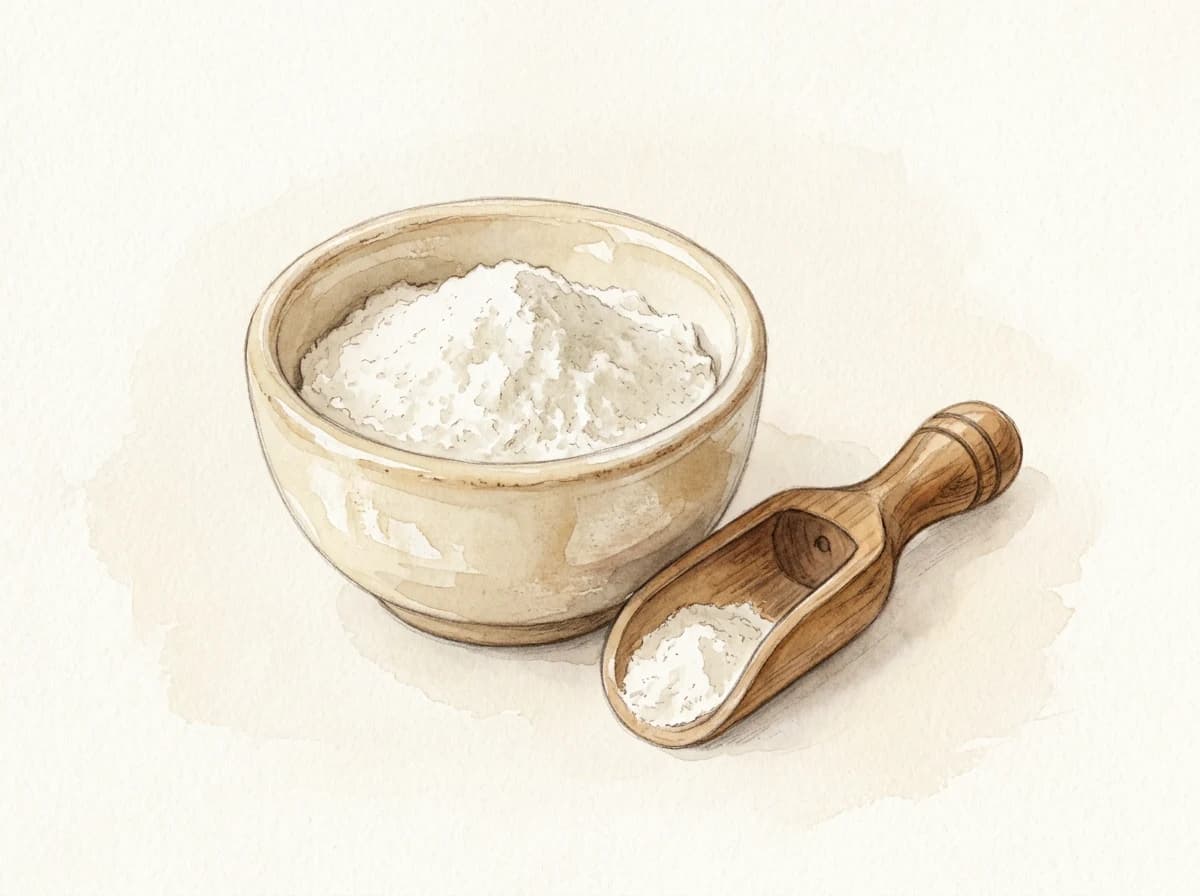
Animal or plant meal Solid
Bone meal
Also called: bone meal, bonemeal, bone flour, steamed bone meal, ground bone, bone fertiliser, bone fertilizer
It provides slow-release phosphorus and calcium, useful for rooting and flowering. It is mixed into the hole when planting fruit trees and bulbs. It works better in neutral or acid soils than in chalky soils.
N
3-4 %
Nitrogen
P
15-25 %
Phosphorus
K
0 %
Potassium
Good-fertiliser rule of thumb. Put organic matter first and use half the dose printed on the label. A garden is spoiled faster by over-feeding than by under-feeding.
What it provides
- Slow phosphorus
- Calcium
- Moderate nitrogen
When to use it
- When planting fruit trees: the new root finds phosphorus and calcium to settle in better.
- When planting bulbs (garlic, tulips): phosphorus nearby encourages new roots.
- In autumn, mixed into the soil: it breaks down over the winter and enriches the bed.
How to make or apply it
- It is bought already ground into a fine powder and ready to use; mix it in well with the soil, do not leave it in a little heap.
Dose
- Fruit trees: 200-300 g (7.1–10.6 oz) mixed with the soil from the hole.
- Bulbs: 50-70 g/m² mixed with the planting soil.
- Base feed: about 100 g/m² every 2-3 years, if a soil test or experience indicates a lack of phosphorus.
Good for…
Fruit trees at plantingGarlic, onions and shallotsStrawberries
Precautions
- It is of animal origin: if you prefer to avoid it, ground rock phosphate is a mineral-based alternative.
- In chalky soils (high pH) the phosphorus is barely available and it performs less well. If you have dogs, bury it well: they are attracted by the smell and eating it can upset their stomachs.
Sustainability: It makes use of a by-product of the meat industry. Choose products approved for organic farming.
Make your own compost
The best organic fertiliser is made at home from what you would otherwise throw away. Learn to make good compost step by step.