
vuelta al huerto
Back to DIY builds
Animal shelters and accessoriesEasy

No-waste PVC feeder

Also known as: PVC chicken feeder, PVC pipe feeder, gravity chicken feeder, no-waste chicken feeder, DIY chicken feeder, hopper feeder, poultry feeder

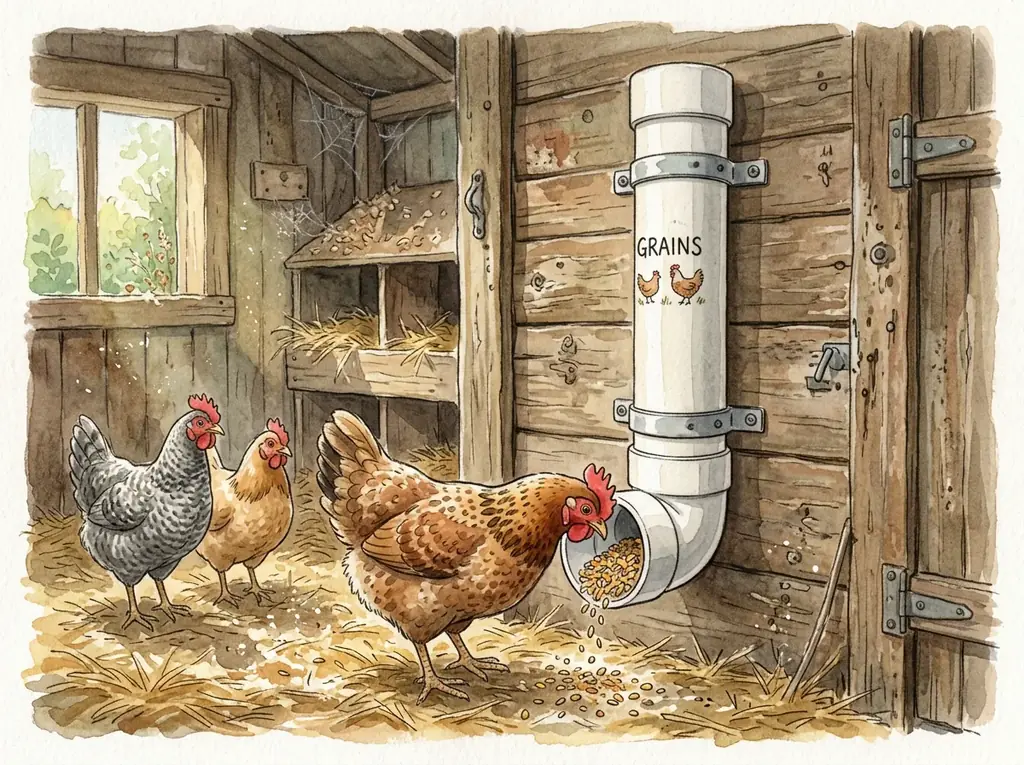
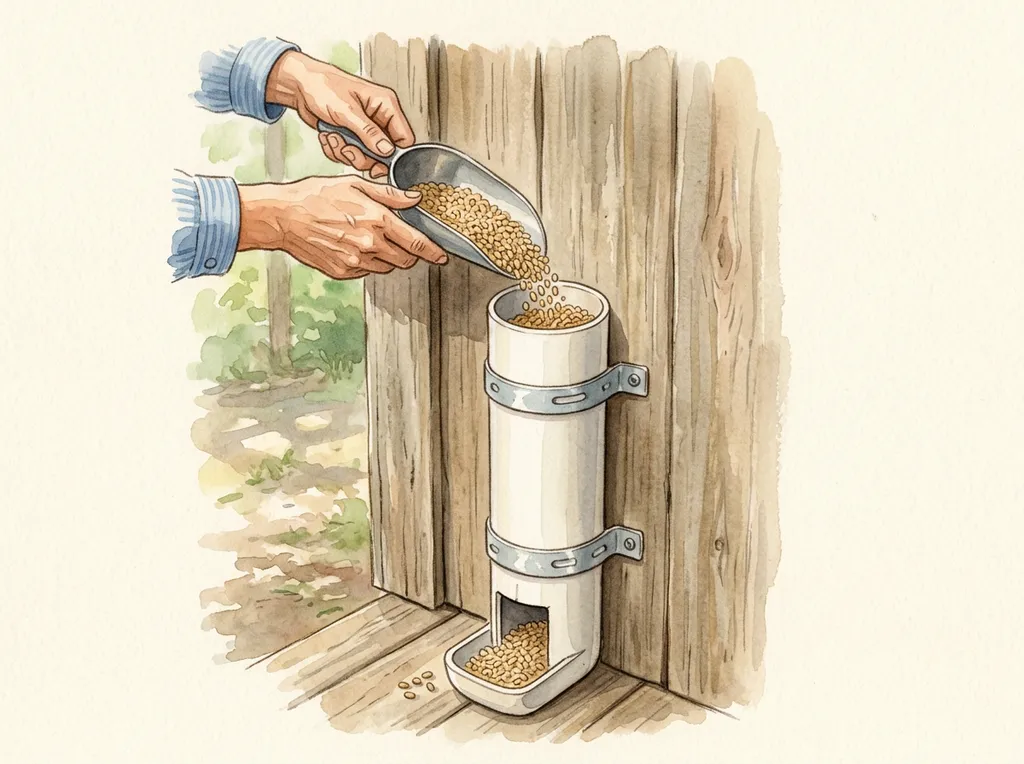
A feeder made from PVC pipe of 110 mm (4.33 in) diameter and 60 cm (23.6 in) long, with a front opening 3 cm (1.2 in) high near the base and an inspection cap at the top. It holds about 5 L (about 1.3 US gal) of feed. The hens eat without tipping it over or treading in it.

Time
45 min
Cost
6–12 €
Steps
4
No-waste PVC feeder

What is it for?

  • It works as self-service: you only need to refill it once a week, depending on how many hens you have.
  • They can't scratch or throw the feed onto the ground.
  • With the top cap closed, neither rain nor birds get in to steal feed.
  • It is very cheap: with a metre of PVC pipe you already have it.

Read this before buying anything

The materials in this project will be in contact with the soil or with animals. Always choose food-safe / for garden use materials and avoid unbranded industrial plastics, cheap black PVC or coatings with biocides.

Safe materials

Keep your garden free of poisons

How to treat timber, insulate from the soil and what to avoid, without poisons. See the terms in the glossary.

Fixings

  • Use stainless (A2/A4) or hot-dip galvanised fixings. Cheap zinc-plated screws rust within a year outdoors and stain the timber.

What NOT to use here

  • Creosote (old railway sleepers): carcinogenic and banned for domestic use. Tar stains mean: leave it out.
  • Classic green pressure-treated timber (CCA): it contains arsenic and chromium. Current ACQ timber is safer but still not ideal for raised beds or hen houses.
  • Polyurethane varnishes and solvent-based enamels with fungicidal biocides: they release copper and solvents into the soil. Read the label.
  • Car tyres for growing food: they release heavy metals and hydrocarbons when warm. Fine for decoration, not for tomatoes.
  • Surfaces that animals gnaw or peck (hen house, rabbit hutch): no enamels containing lead and no paints with antifungals.

Materials

  • 1 PVC pipe of 110 mm (4.33 in) diameter and 60 cm (23.6 in)
  • 1 inspection cap of 110 mm (4.33 in)
  • 1 blind end cap of 110 mm (4.33 in) (base)
  • 1 tube of PVC adhesive
  • 2 metal brackets and screws to fix it to the wall

Tools

  • Jigsaw or thin angle-grinder disc
  • Sandpaper
  • Drill
  • Tape measure

Plan with measurements

PVC pipe of 110 mm and 60 cm, with a blind cap at the bottom and an inspection cap at the top, an opening of 8×3 cm at 2 cm from the base, fixed to the wall with the base 25 cm from the ground; it holds about 5 litres of feed.

PVC feeder: dimensioned planPVC pipe of 110 mm and 60 cm, with a blind cap at the bottom and an inspection cap at the top, an opening of 8×3 cm at 2 cm from the base, fixed to the wall with the base 25 cm from the ground; it holds about 5 litres of feed.From the front60 cm25 cmØ 110 mmInspection cap:fill it hereAbout 5 L of feed,up to 5 cm from the rim2 brackets to the wallOpening 8×3 cm2 cm from the baseBlind cap gluedwith PVC solvent cement

Step by step

Step 1: Cut the outlet opening and close the base
1

Cut the outlet opening and close the base

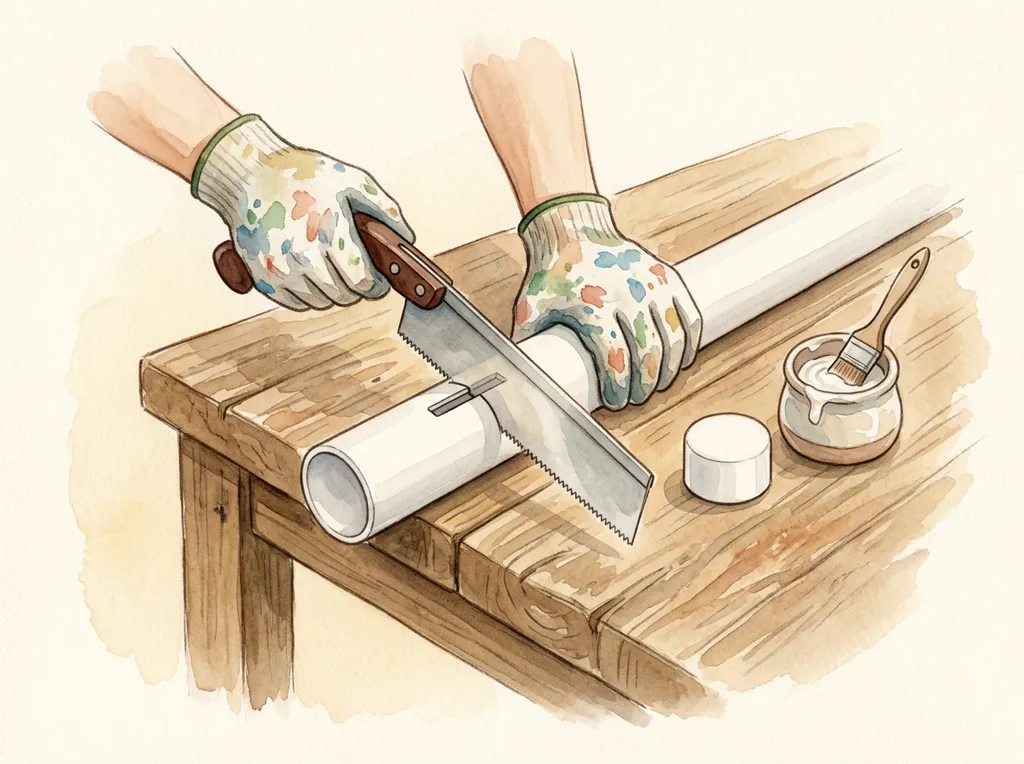
Mark on the front, 2 cm (0.8 in) from the lower end, an opening about 8 cm (3.1 in) wide and 3 cm (1.2 in) high. Cut it with a jigsaw or a fine hacksaw and sand off the burrs. Glue the blind cap onto that end with PVC adhesive: it will be the base of the feeder.
Step 2: Fit the top cap and the brackets
2

Fit the top cap and the brackets

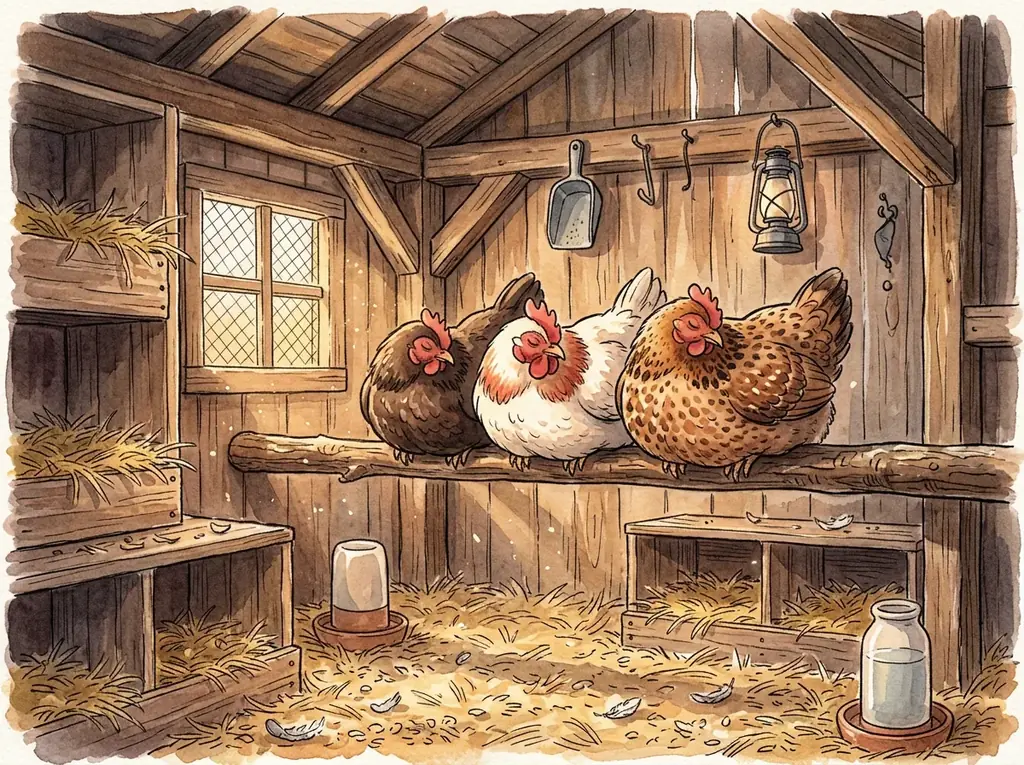
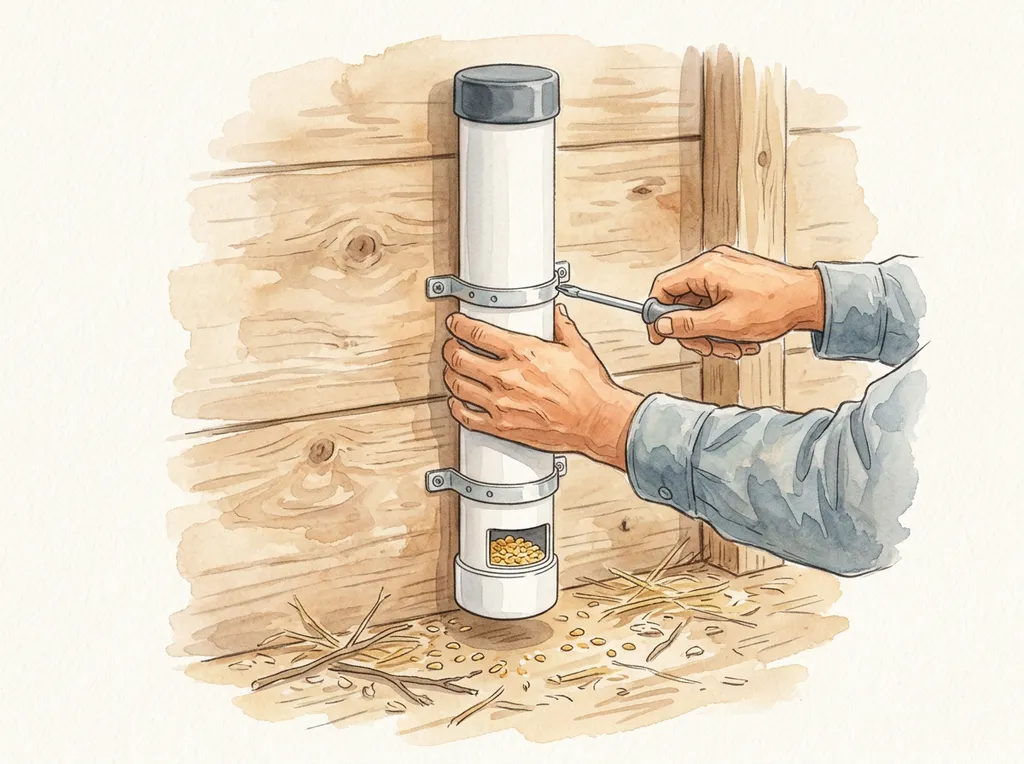
On the opposite end fit the inspection cap, which is where you will refill it. Screw 2 brackets to the pipe and fix it to the wall, with the base about 25 cm (9.8 in) from the floor, roughly at the height of a hen's back, and with the opening facing the inside of the coop.

Step 3: Fill it and check the feed comes down
3

Fill it and check the feed comes down

Place it in a dry spot in the coop. Fill it through the top cap to 5 cm (2 in) from the rim. The feed comes down by itself to the opening. Check that it doesn't jam: the fine dust in the feed can block it.

Step 4: Clean the feeder every week
4

Clean the feeder every week

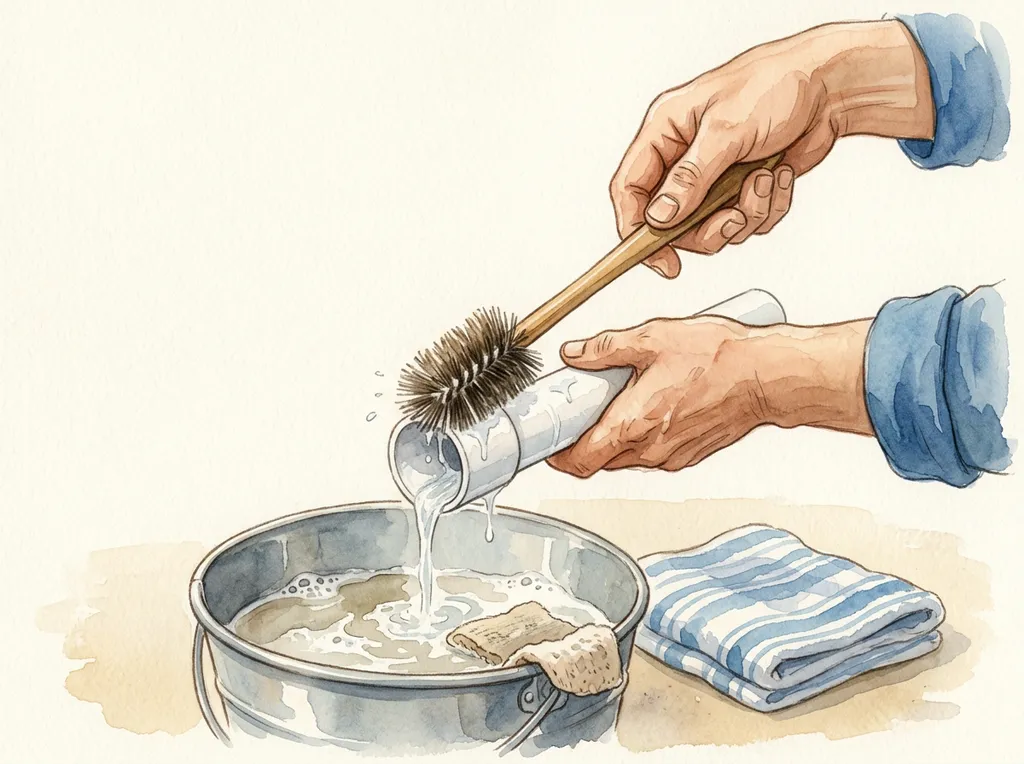
Empty any damp leftovers every week and wash the inside with water and a brush; dry it thoroughly before refilling, because damp feed goes mouldy and can make the birds ill. A 60 cm (23.6 in) feeder serves 6-8 hens. If they squabble while eating, add a second feeder about 40 cm (15.7 in) apart.

Tips for this build

  • If you make the opening higher than 4 cm (1.6 in), they waste and soil more feed.
  • Very fine powdered feed compacts at the bottom and blocks the opening; use pellets or grain.
  • Fix it firmly to the wall: large hens push a loose pipe about.

Variations

  • A 90 mm (3.54 in) pipe of 40 cm (15.7 in), shorter, for 3-4 hens.
  • With two opposite openings, if you place it in the middle of the coop.

Keep reading

More builds in this category

See all DIY builds