
vuelta al huerto
Back to DIY builds
Animal shelters and accessoriesMedium

Chicken tractor (mobile pen)

Also known as: chicken tractor, mobile chicken coop, movable chicken coop, portable chicken run, chicken ark, moveable hen house, chicken pen on wheels

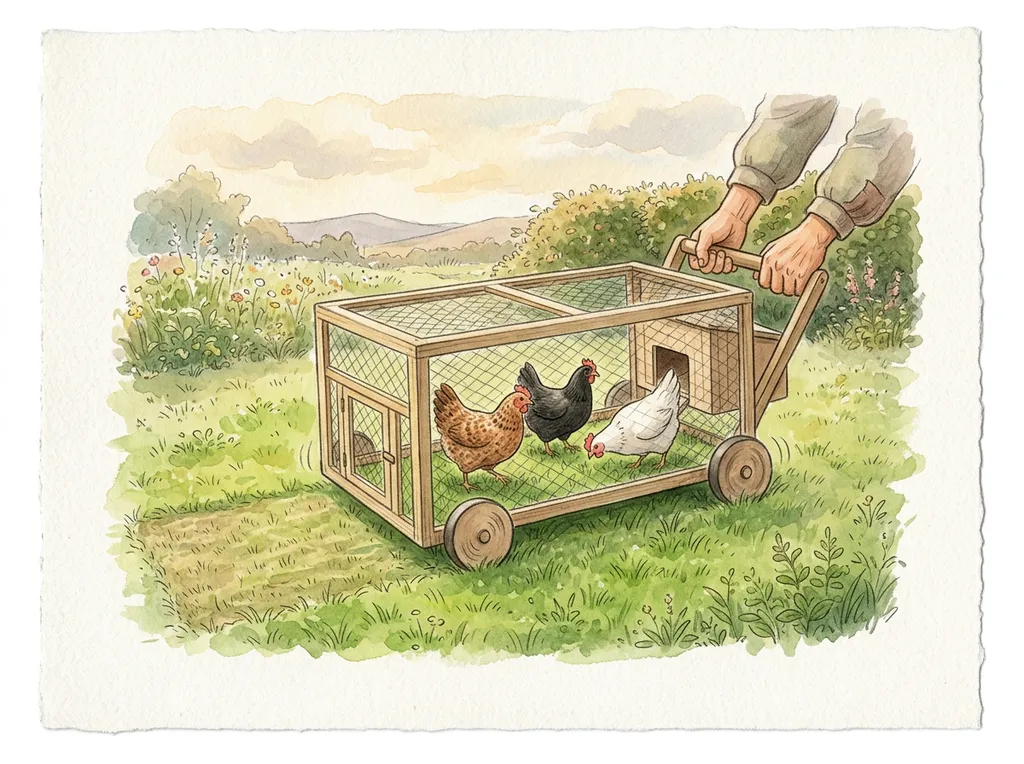
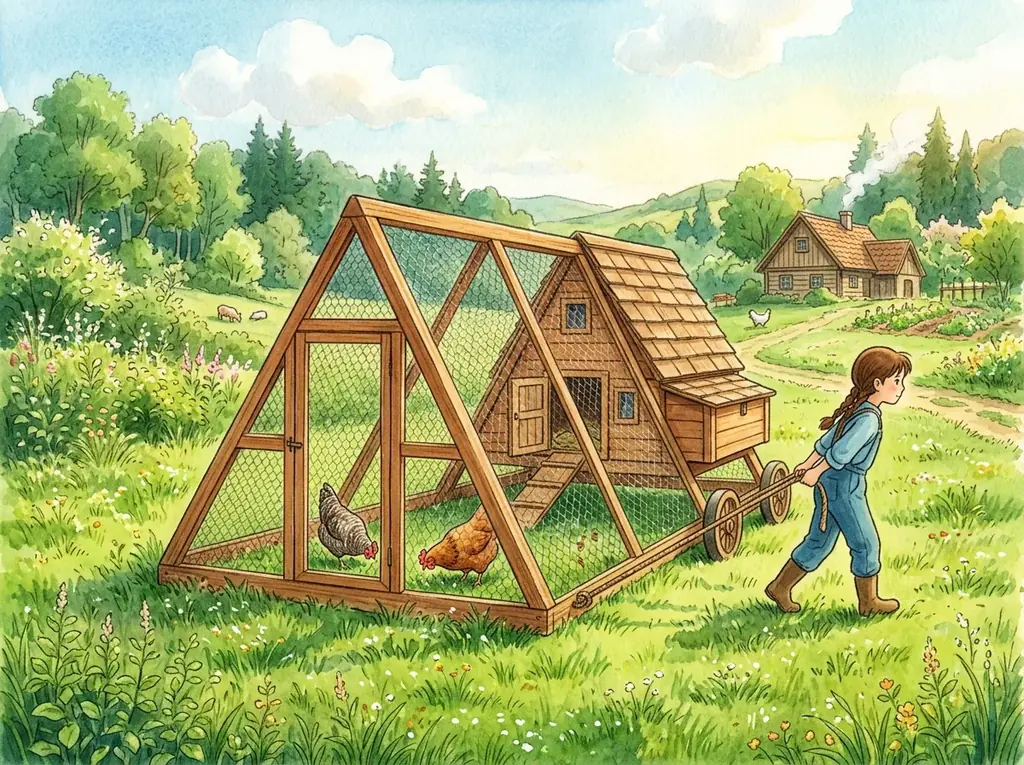
A mobile pen of 2×1.5 m (4.9 ft) with a nest, perches and wheels at one end, for about 4 hens. It is moved daily or every few days onto fresh grass. It has a waterproof roof and 25 mm (0.98 in) mesh.

Time
1 day
Cost
40–90 €
Steps
4
Chicken tractor (mobile pen)

What is it for?

  • Natural grazing rotation: by moving it, the hens always walk on fresh grass.
  • They fertilise and aerate the soil before the next crop.
  • They eat insect larvae and weed seeds.
  • With no fixed run, no permanent bare patch is left.

Read this before buying anything

Anything that touches your food or your animals should NOT be treated with polyurethane varnishes, solvent-based enamels or stains with fungicidal or insecticidal biocides. The soil leaches these products and they end up in your tomatoes or in the hens' feed. Use boiled linseed oil, beeswax + oil, or a water-based stain labelled “for garden use” or EN 71-3.

Safe materials

Keep your garden free of poisons

How to treat timber, insulate from the soil and what to avoid, without poisons. See the terms in the glossary.

Safe timber treatment

  • Use untreated timber wherever it touches the soil or the animals. Pine and fir last 3-5 years. Black locust, sweet chestnut and oak last 10-15 years with nothing on them.
  • To extend its life without poisons: pure boiled linseed oil (2-3 coats), beeswax + linseed oil warmed together (60/40) or tung oil. Food-safe and reversible.
  • If you prefer a stain: a water-based stain without biocides labelled for garden use / food safe / EN 71-3 (toy safety). Apply it on the outside only, never on the inside faces that touch soil or food.

Metal and fixings

  • Galvanised mesh: file off the burrs and fold over the edges. If animals will be near it, choose green plastic-coated mesh with a galvanised core.

What NOT to use here

  • Creosote (old railway sleepers): carcinogenic and banned for domestic use. Tar stains mean: leave it out.
  • Classic green pressure-treated timber (CCA): it contains arsenic and chromium. Current ACQ timber is safer but still not ideal for raised beds or hen houses.
  • Polyurethane varnishes and solvent-based enamels with fungicidal biocides: they release copper and solvents into the soil. Read the label.
  • Car tyres for growing food: they release heavy metals and hydrocarbons when warm. Fine for decoration, not for tomatoes.
  • Surfaces that animals gnaw or peck (hen house, rabbit hutch): no enamels containing lead and no paints with antifungals.

Materials

  • 5×5 cm (2 in) timber: 4 legs (2 of 100 cm, 39.4 in and 2 of 65 cm, 25.6 in) and the base frame of 200×150 cm (59.1 in)
  • Welded mesh of 25×25 mm (0.98 in), 6 m² (65 sq ft)
  • Exterior plywood of 60×40 cm (15.7 in) (raised nest)
  • 2 wheelbarrow wheels with their axle
  • Corrugated sheet or plastic of 200×150 cm (59.1 in) (roof)
  • Secure bolt for the 40×80 cm (31.5 in) door

Tools

  • Saw
  • Drill
  • Staple gun for mesh
  • Gloves (the cut ends of the mesh are sharp)

Plan with measurements

Bottomless pen of 200×150 cm, 100 cm high at the front and 65 cm at the back (roof sloping 10° backwards), with 25 mm mesh, a door of 40×80 cm, a nest of 30×30 cm, a perch of 80 cm at 40 cm and 2 wheels on one short side.

Chicken tractor: dimensioned planBottomless pen of 200×150 cm, 100 cm high at the front and 65 cm at the back (roof sloping 10° backwards), with 25 mm mesh, a door of 40×80 cm, a nest of 30×30 cm, a perch of 80 cm at 40 cm and 2 wheels on one short side.From the side200 cm100 cm65 cmFrom above150 cm200 cmSheet-metal roof 200×150 cm,10° backwardsDoor 40×80 cmwith a secure latchNest of 30×30 cmin the covered cornerPerch of 80 cm40 cm from the ground2 wheels on one short side;at the other, a skidMesh of 25 mm down tothe ground: no base

Step by step

Step 1: Build the base frame and fit the wheels
1

Build the base frame and fit the wheels

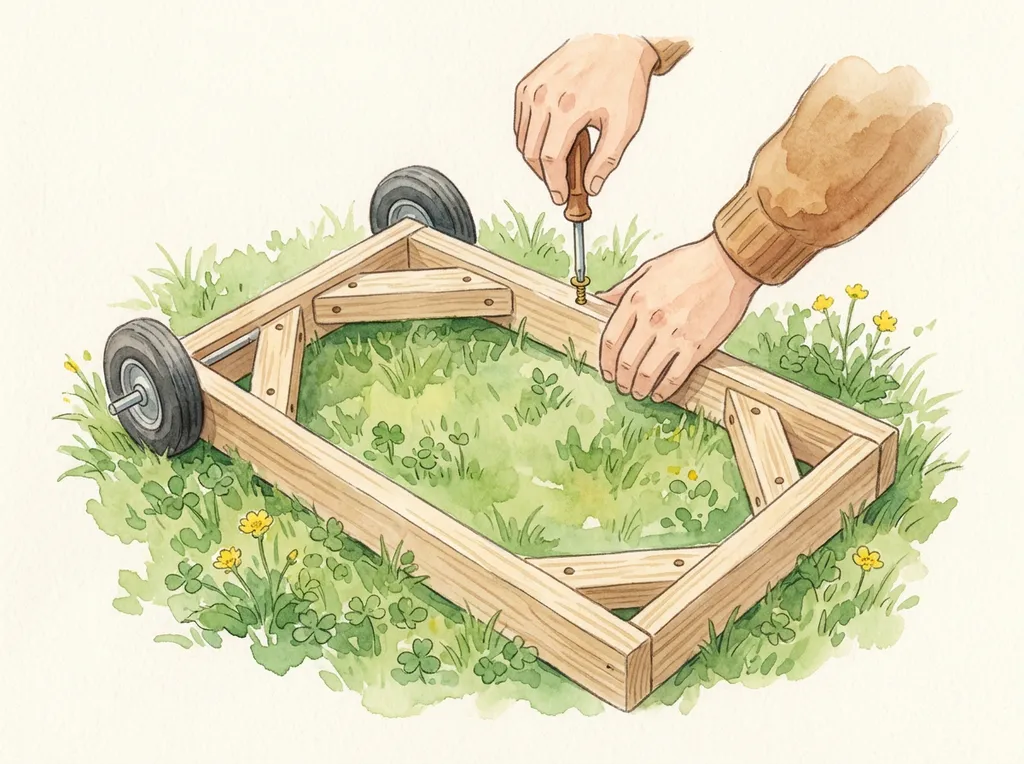
Build a rectangle of 200×150 cm (59.1 in) that rests directly on the ground (the tractor has no floor). Fit the axle with the 2 wheels on one short side and a wooden skid on the opposite one, so that it moves by tilting it and pulling. Reinforce the corners with diagonal braces.
Step 2: Fix the mesh and the waterproof roof
2

Fix the mesh and the waterproof roof

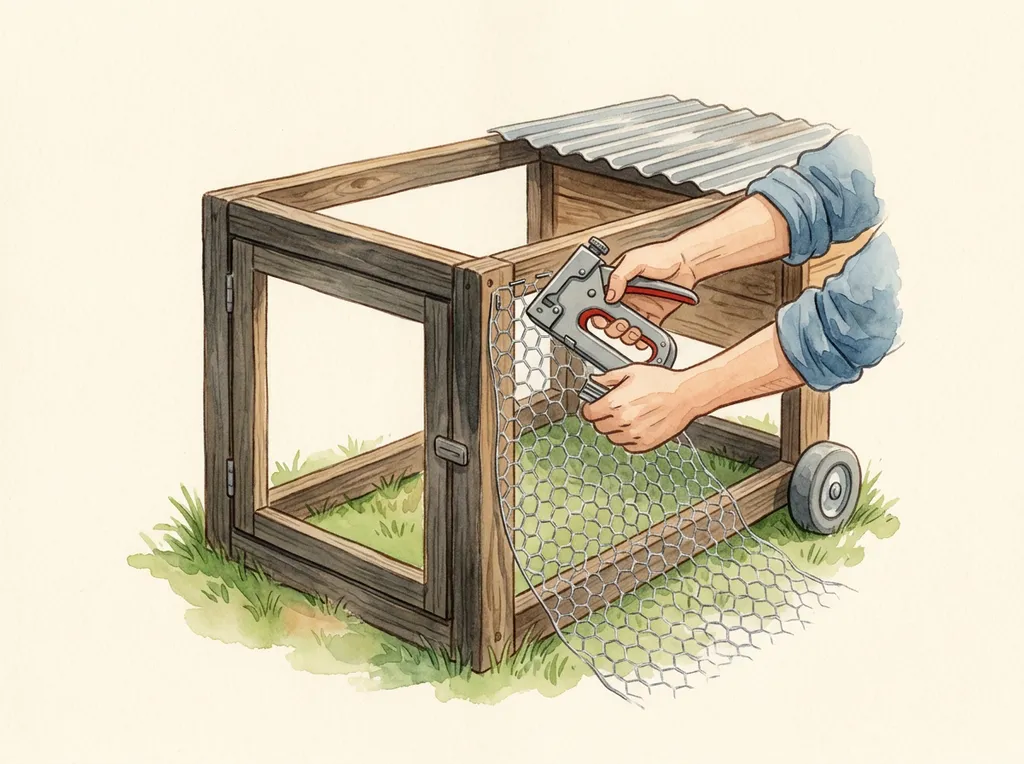
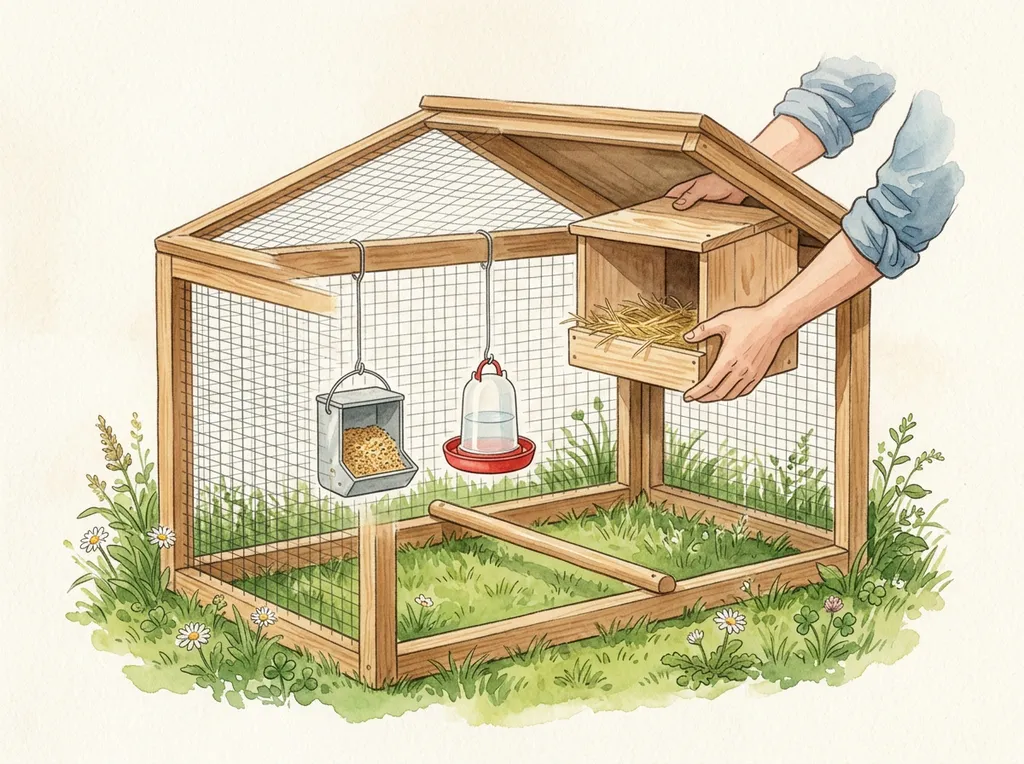
Staple the mesh to the sides and the roof, leaving one side as a hinged door. Take the mesh right down to the ground, with no gaps underneath, so that no predator can slip in. Cover the top with the sheet, sloping about 10° backwards: the front legs are 100 cm (39.4 in) and the back ones 65 cm (25.6 in).

Step 3: Install the nest and the perches
3

Install the nest and the perches

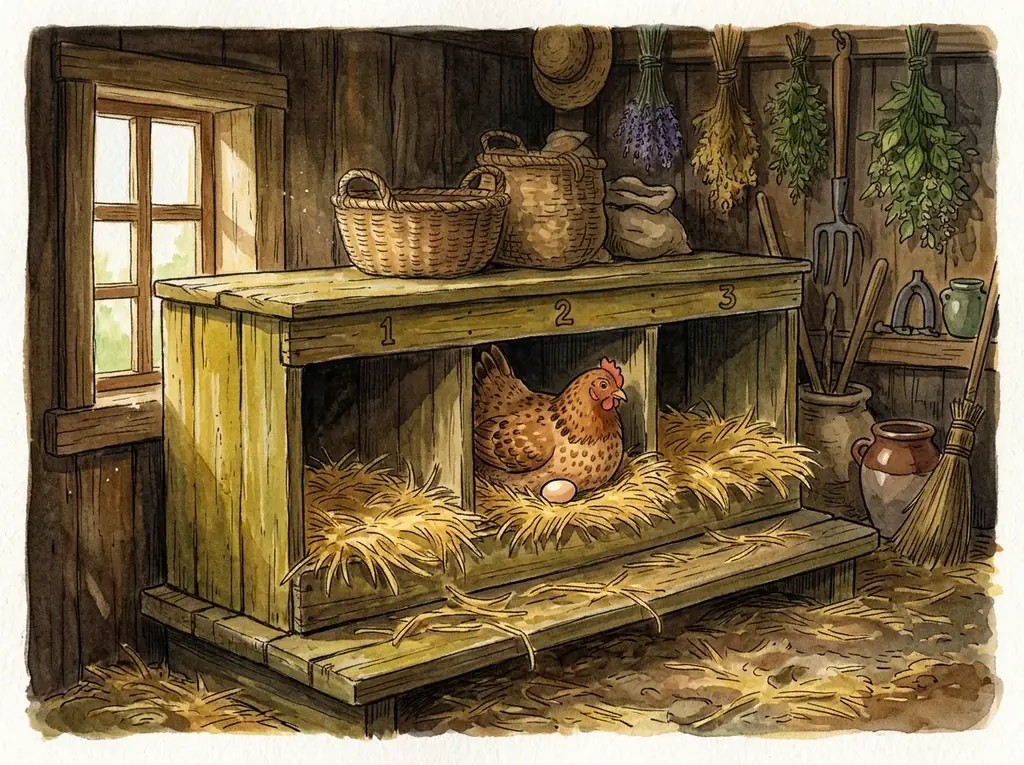
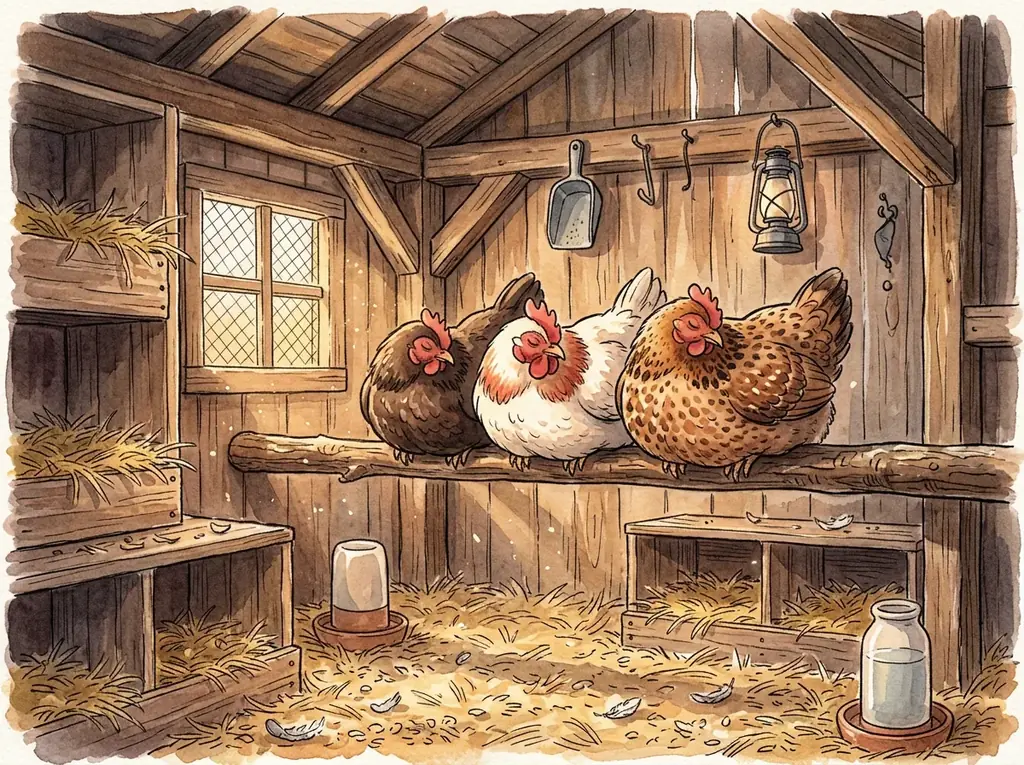
Put a nest box of 30×30 cm (11.8 in) in a covered corner. Fit a sanded perch of 80 cm (31.5 in) at about 40 cm (15.7 in) from the floor. Hang the feeder and the drinker, rather than leaving them on the ground: that way they get less soiled with droppings.

Step 4: Move the tractor onto fresh grass often
4

Move the tractor onto fresh grass often

Move the tractor every day or every 2-3 days to an adjoining patch, about 2 m (6.6 ft) in a straight line, and let the grass behind rest for at least a month. Offer shade and clean water in every position. In areas with foxes, the tractor is not a substitute for a secure coop to spend the night in. Don't use it on beds with vegetables you will eat soon, especially leafy or root crops, because of the risk of contamination with droppings; keep those areas for beds that are resting.

Tips for this build

  • If you don't move it often, the ground turns to mud and parasites build up.
  • If the ground is very soft, put boards under the wheels when moving it.
  • Hens fly little, but if there are low trees cover the top: if one escapes, the others follow.
  • In winter, use the tractor only by day and have them sleep in a fixed coop.

Tractor stocking density and rotation

Move it before the grass is stripped down to bare soil.

Rough figures

In a domestic garden it is best to keep few birds and move them often.

  • As a rough guide, 1-2 m² (11–22 sq ft) of grass per hen per day of stay.
  • Offer shade and clean water in every position.

Variations

  • Mini tractor for 1-2 hens: 120×60 cm (23.6 in), which one person can move alone.
  • With a direct exit into a separate run, via a tunnel with a side door and a removable mesh.

Keep reading

More builds in this category

See all DIY builds