vuelta al huerto
Back to DIY builds
Raised beds and containersMedium

Hugelkultur bed (with logs inside)

Also known as: hugelkultur, hugel bed, mound bed with logs, German mound bed, wood-core raised bed, buried wood bed

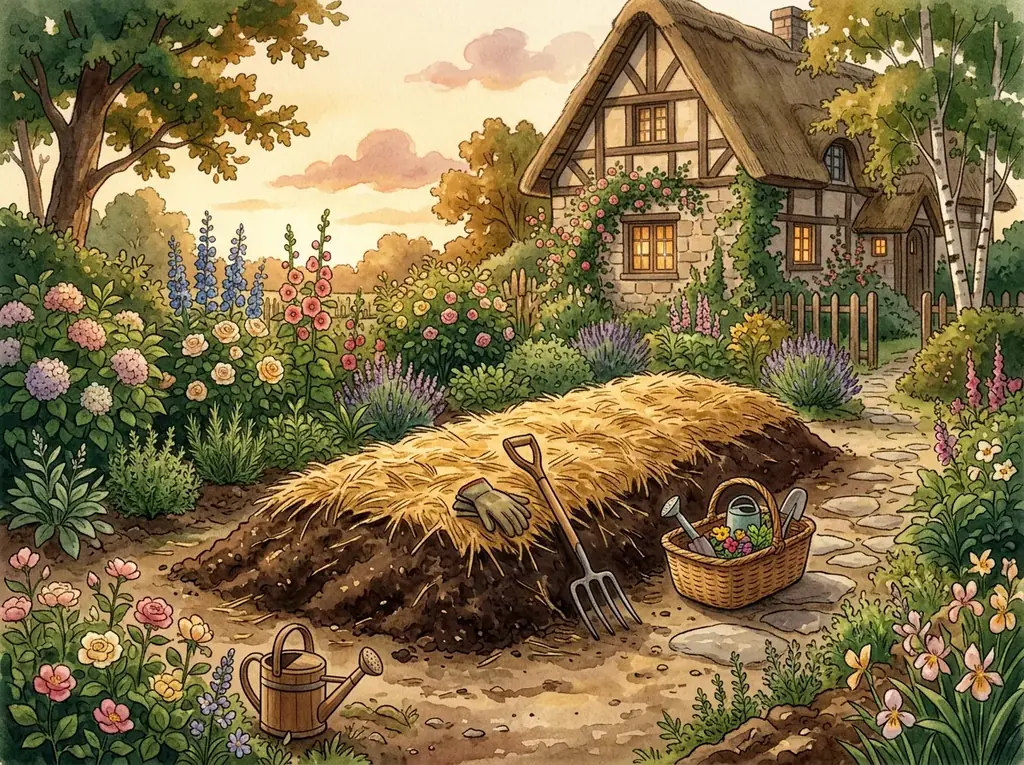
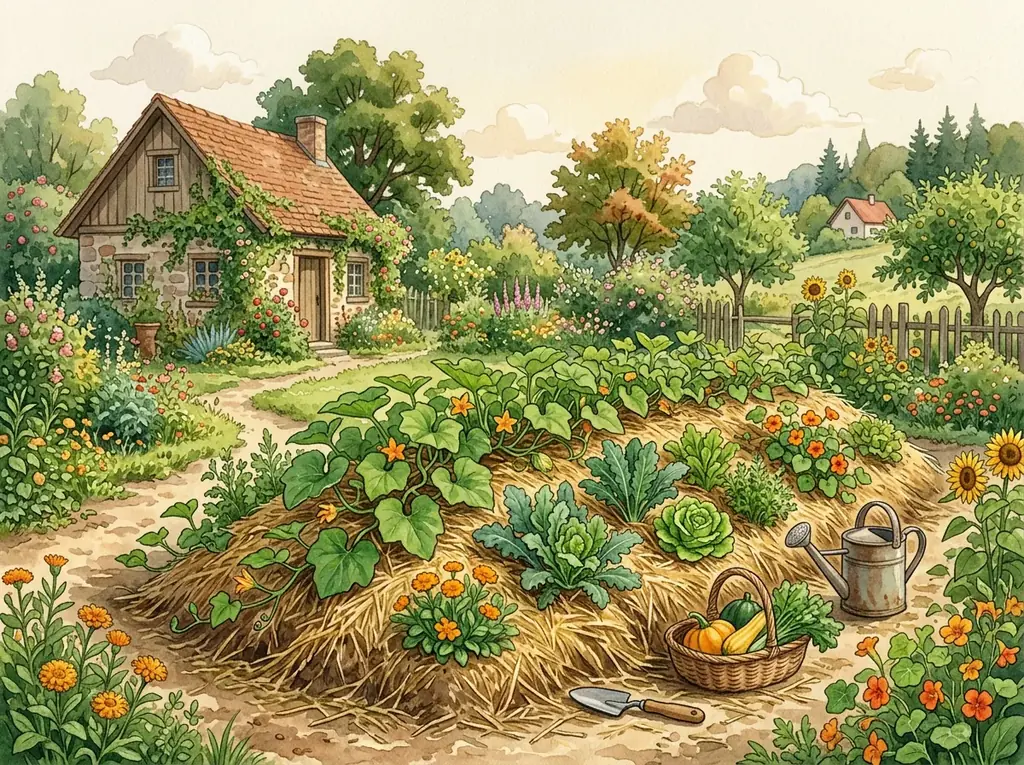
A mounded bed of 2 × 1 m (3.3 ft) made with logs, branches, compost and soil. The buried wood holds moisture and, as it breaks down, feeds the soil; that is why the bed performs better from the second year onwards.

Time
1 day
Cost
€0–20 (firewood scraps and compost)
Steps
4
Hugelkultur bed (with logs inside)

What is it for?

  • Once settled, it usually needs less watering than a normal bed, because the buried wood stores water.
  • It recycles pruning and woody garden waste that you would otherwise take to the recycling centre.
  • Poor or stony ground: it builds fertile soil by accumulation.
  • The logs take several years to break down, so it needs hardly any maintenance in the meantime.

Read this before buying anything

Anything that touches your food or your animals should NOT be treated with polyurethane varnishes, solvent-based enamels or stains with fungicidal or insecticidal biocides. The soil leaches these products and they end up in your tomatoes or in the hens' feed. Use boiled linseed oil, beeswax + oil, or a water-based stain labelled “for garden use” or EN 71-3.

Safe materials

Keep your garden free of poisons

How to treat timber, insulate from the soil and what to avoid, without poisons. See the terms in the glossary.

Safe timber treatment

  • Use untreated timber wherever it touches the soil or the animals. Pine and fir last 3-5 years. Black locust, sweet chestnut and oak last 10-15 years with nothing on them.
  • To extend its life without poisons: pure boiled linseed oil (2-3 coats), beeswax + linseed oil warmed together (60/40) or tung oil. Food-safe and reversible.
  • If you prefer a stain: a water-based stain without biocides labelled for garden use / food safe / EN 71-3 (toy safety). Apply it on the outside only, never on the inside faces that touch soil or food.

Insulating the base and sides

  • In the bottom of the bed, before adding soil: ink-free cardboard (2-3 overlapping layers). It smothers weeds and breaks down in 6-12 months, adding organic matter.
  • If you have invasive grasses (couch grass, bindweed): on top of the cardboard, lay a breathable weed-control membrane of 100-130 g/m² (geotextile). Never waterproof plastic.
  • On the sides, between the timber and the soil, line with EPDM sheet or leave an air gap with battens + breathable membrane. The timber lasts twice as long.
  • Do not use black plastic sheeting or cling film: they suffocate the soil, heat up in summer and leave microplastics behind for good.

What NOT to use here

  • Creosote (old railway sleepers): carcinogenic and banned for domestic use. Tar stains mean: leave it out.
  • Classic green pressure-treated timber (CCA): it contains arsenic and chromium. Current ACQ timber is safer but still not ideal for raised beds or hen houses.
  • Polyurethane varnishes and solvent-based enamels with fungicidal biocides: they release copper and solvents into the soil. Read the label.
  • Car tyres for growing food: they release heavy metals and hydrocarbons when warm. Fine for decoration, not for tomatoes.

Materials

  • Pruning logs 15–25 cm (5.9–9.8 in) in diameter and about 80 cm (31.5 in) long (base layer, about 100 kg, 220.5 lb)
  • Fine brushwood, about 60 L (about 15.9 US gal)
  • Mature compost, about 100 L (about 26.4 US gal)
  • Garden soil, about 250 L (about 66 US gal) (start with what you dig out)
  • Dry leaves, about 40 L (about 10.6 US gal) (for the mulch)
  • Optional: 8–12 stones or 4 battens of about 2 m (6.6 ft) to hold the edges

Tools

  • Spade
  • Rake
  • Axe or handsaw

Plan with measurements

Mound of 200 × 100 cm over a 15 cm pit: logs up to 25 cm above ground in the centre, brushwood in the gaps, 5 cm of compost, 20 cm of soil and 5 cm of leaves. It ends up about 50 cm high in the centre and 25 cm at the edges, not counting the mulch.

Hügelkultur bed: dimensioned planMound of 200 × 100 cm over a 15 cm pit: logs up to 25 cm above ground in the centre, brushwood in the gaps, 5 cm of compost, 20 cm of soil and 5 cm of leaves. It ends up about 50 cm high in the centre and 25 cm at the edges, not counting the mulch.Cross-section100 cm50 cm25 cm15 cmTop view200 cm5 cm of dry leaves(mulch)20 cm of soilwith compost5 cm of finished compostFine brushwood in the gapsLogs of 15-25 cm Øand about 80 cm long,up to 25 cm above the groundHole 15 cm deepLogs laid lengthways

Step by step

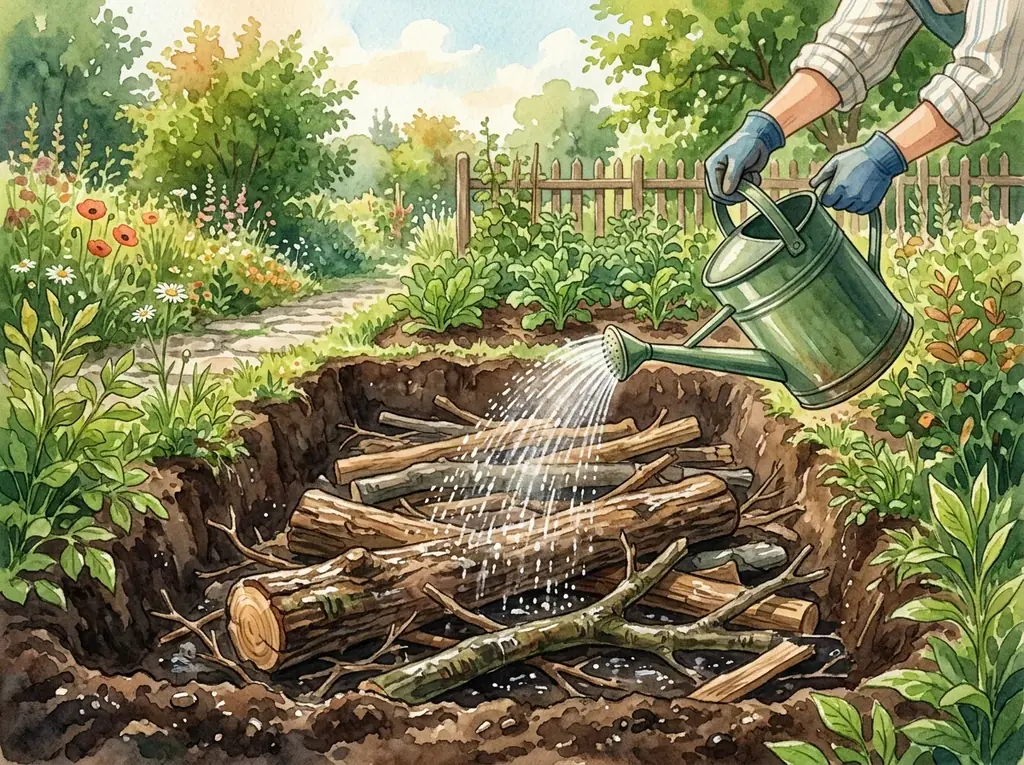
Step 1: Dig out and lay the base logs
1

Dig out and lay the base logs

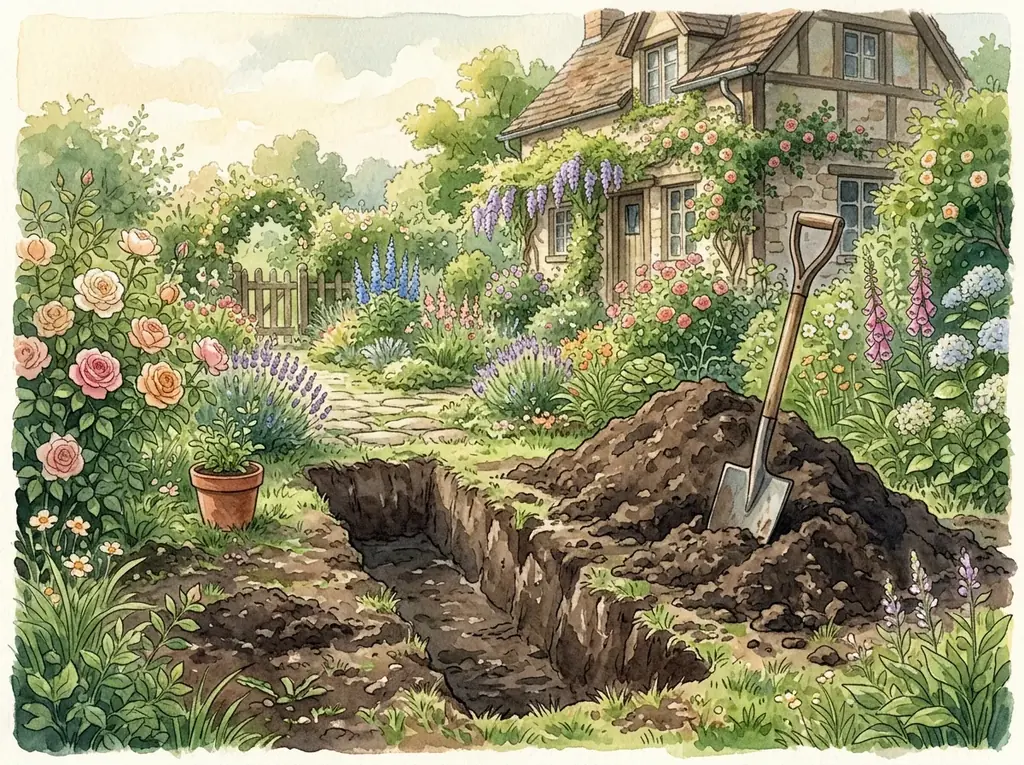
Mark a 200×100 cm (39.4 in) rectangle and dig about 15 cm (5.9 in) deep, keeping the soil to one side. Lay the logs lengthways, piling them higher in the centre (about 25 cm, 9.8 in above the ground) and lower at the edges, to give a mound shape. Hardwood logs, such as oak or olive, take longer to break down than soft pine. If you soak them well beforehand, they will hold more water.
Step 2: Fill the gaps with branches, leaves and compost
2

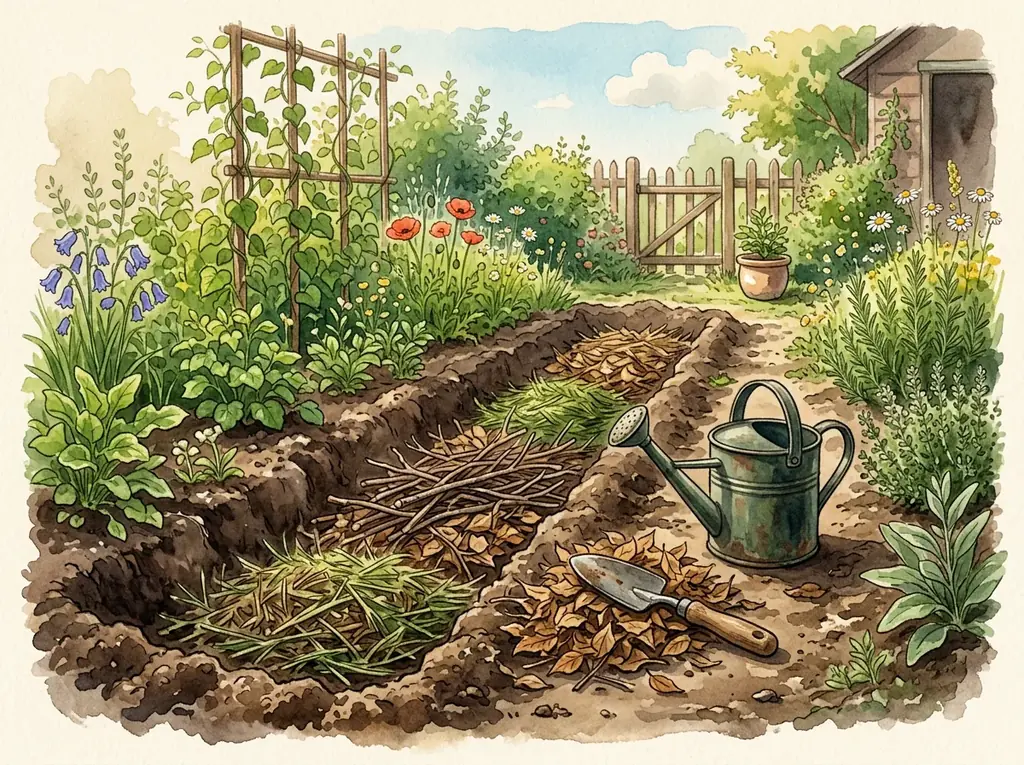
Fill the gaps with branches, leaves and compost

Fill the gaps between the logs with fine brushwood up to their height. On top spread about 5 cm (2 in) of mature compost and dampen each layer as you add it. Do not tamp it down: the inside should stay airy.

Step 3: Cover with soil and mulch
3

Cover with soil and mulch

Cover everything with about 20 cm (7.9 in) of the soil from the excavation mixed with compost, shaping it into a dome: about 50 cm (19.7 in) high in the centre and 25 cm (9.8 in) at the edges. Mulch with 5 cm (2 in) of dry leaves. If you place stones or battens at the edge, you will stop heavy rain from washing the soil away.

Step 4: Sow according to the age of the bed
4

Sow according to the age of the bed

In the first year it is best to sow undemanding crops, such as squash, potato or beans, because the wood uses up nitrogen while it starts to break down. From the second year you can plant leafy and root vegetables. Water normally during the first summer, because the logs have not yet stored water; from the second year you will need to water less.

Tips for this build

  • Avoid burying walnut, eucalyptus, laurel, cedar or yew wood, because it releases substances that make it hard for other plants to grow (and yew is highly toxic). Fruit trees, oak, olive or holm oak are good choices.
  • The mound sinks about 10–15 cm (3.9–5.9 in) in the first year. This is normal: add more soil and mulch on top.
  • The south-facing slope dries out more; plant drought-tolerant species there and leave the north side for leafy vegetables.
  • Never bury treated wood (sleepers, creosote-treated posts, pressure-treated timber, pallets without the HT stamp or painted wood): it releases toxic substances into the soil which can reach what you grow.

Order of the hugelkultur layers (from bottom to top)

Order

  • Large logs, which form the base and hold water.
  • Branches and leaves, which fill the gaps and break down quickly.
  • Mature compost, which provides nutrients from the start.
  • Soil and mulch, where you sow.

More builds in this category

See all DIY builds