
vuelta al huerto
Back to DIY builds
Growing food for animalsMedium

Black soldier fly (BSF) larvae bin

Also known as: black soldier fly, BSF, Hermetia illucens, black soldier fly larvae, BSF larvae bin, soldier fly grubs, BSF composter

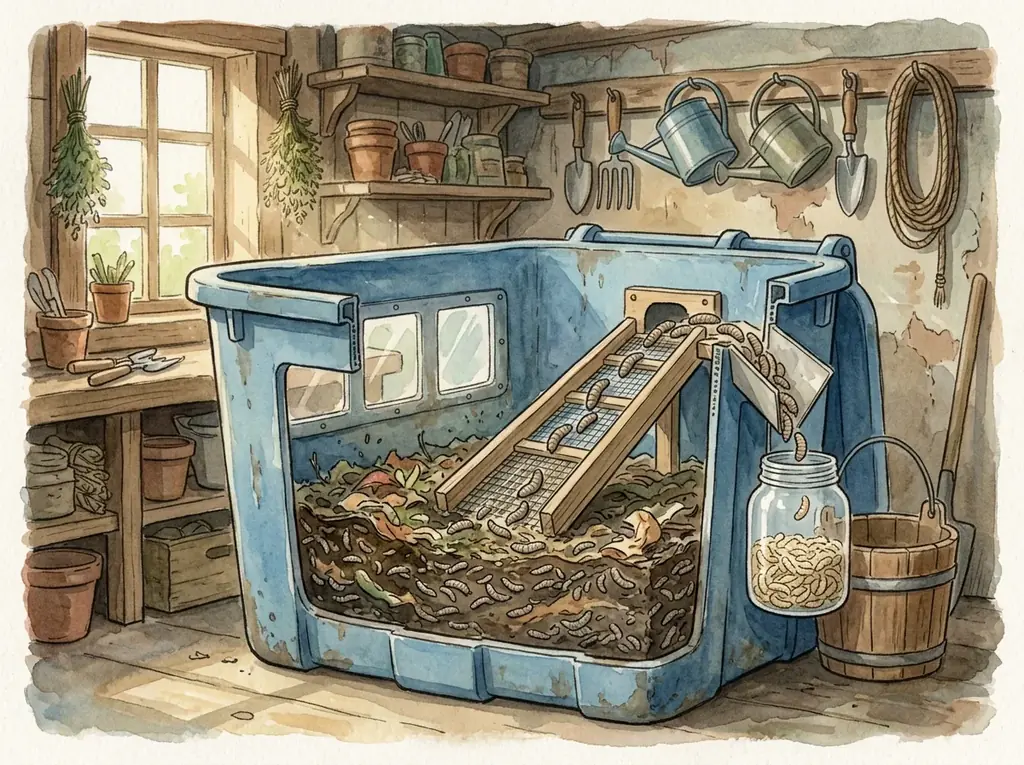
A sloping 60×40 cm (15.7 in) box with an escape ramp for the mature larvae of the black soldier fly (Hermetia illucens, BSF). It turns organic scraps into protein-rich larvae.

Time
2 h to build
Cost
20–40 €
Steps
4
Black soldier fly (BSF) larvae bin

What is it for?

  • It makes use of large amounts of organic scraps that a home compost heap handles less well.
  • The larvae provide protein (roughly 35-45%) and fat, and are a good feed for birds.
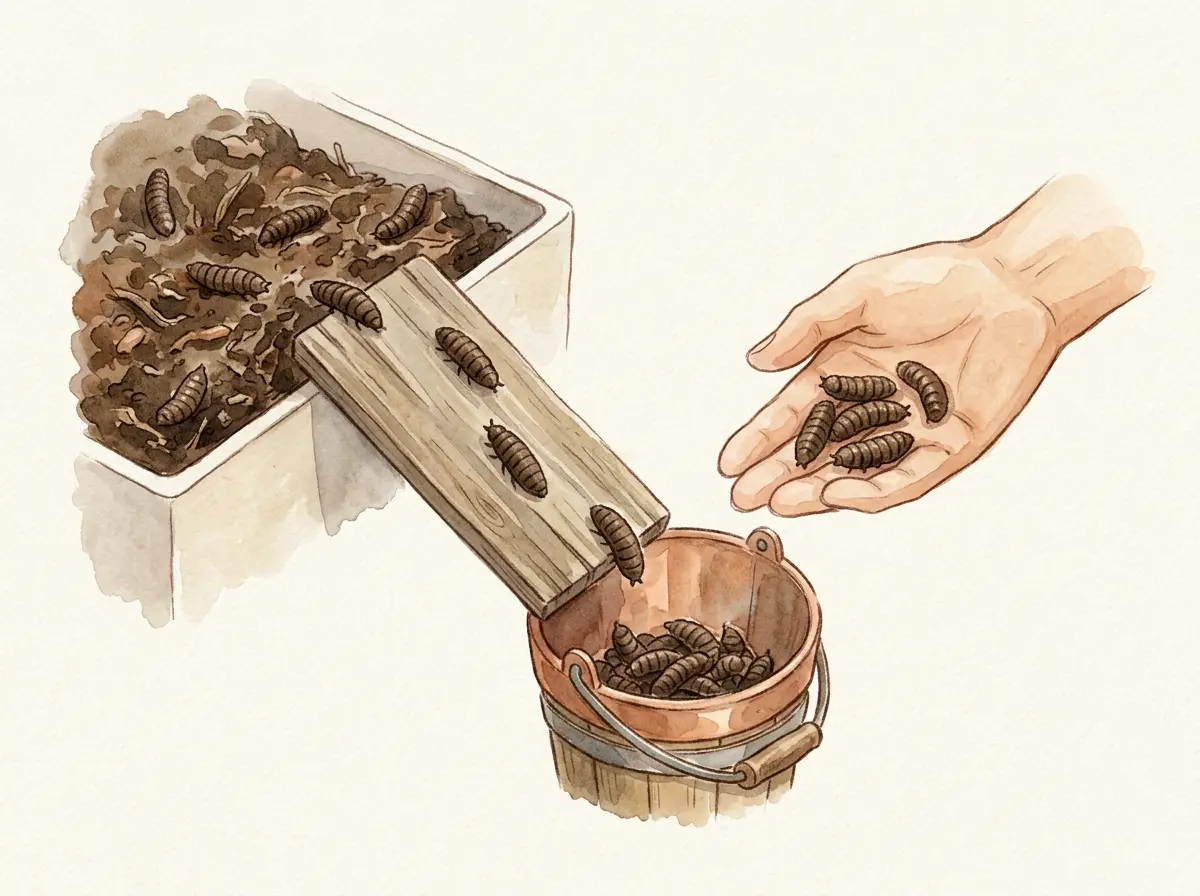
  • The mature larvae climb out on their own up a ramp into a bucket.
  • The final residue (frass) is a good fertiliser and, if the system is well managed, smells little.

Read this before buying anything

The materials in this project will be in contact with the soil or with animals. Always choose food-safe / for garden use materials and avoid unbranded industrial plastics, cheap black PVC or coatings with biocides.

Safe materials

Keep your garden free of poisons

How to treat timber, insulate from the soil and what to avoid, without poisons. See the terms in the glossary.

Metal and fixings

  • Galvanised mesh: file off the burrs and fold over the edges. If animals will be near it, choose green plastic-coated mesh with a galvanised core.

Materials

  • Large plastic box of 60×40×30 cm (11.8 in), set at a slope
  • Channel ramp at about 45°, with a non-slip edge
  • 1 tub of 5-10 L (about 1.3–2.6 US gal) to collect the larvae
  • Mesh of about 2 mm (0.08 in) for the lid
  • Starter substrate: vegetable scraps and 200 g (7.1 oz) of BSF larvae

Tools

  • Drill
  • Neutral silicone (1 cartridge)
  • Mesh scissors

Plan with measurements

Box of 60 by 40 by 30 centimetres with one end raised 15 centimetres (about 15 degrees), waste in layers of 3 centimetres, a ramp at 45 degrees up which the mature larvae climb out into a 5 to 10 litre bucket, and a liquid outlet at the low end.

Black soldier fly larvae bin: dimensioned planBox of 60 by 40 by 30 centimetres with one end raised 15 centimetres (about 15 degrees), waste in layers of 3 centimetres, a ramp at 45 degrees up which the mature larvae climb out into a 5 to 10 litre bucket, and a liquid outlet at the low end.Side view15 cm60 cm≈ 15°Ramp at 45° with a non-slipedge: the mature larvaeclimb up on their ownCollection bucketof 5-10 LBox 60 × 40 × 30 cmwith a 2 mm mesh lidWaste in layers of 3 cmevery 2-3 daysLow end: outletfor the liquid, or a spongeIn the shade, at 27-32 °C · upper, drier area so they can pupate

Step by step

Step 1: Set up the box sloping towards the exit
1

Set up the box sloping towards the exit

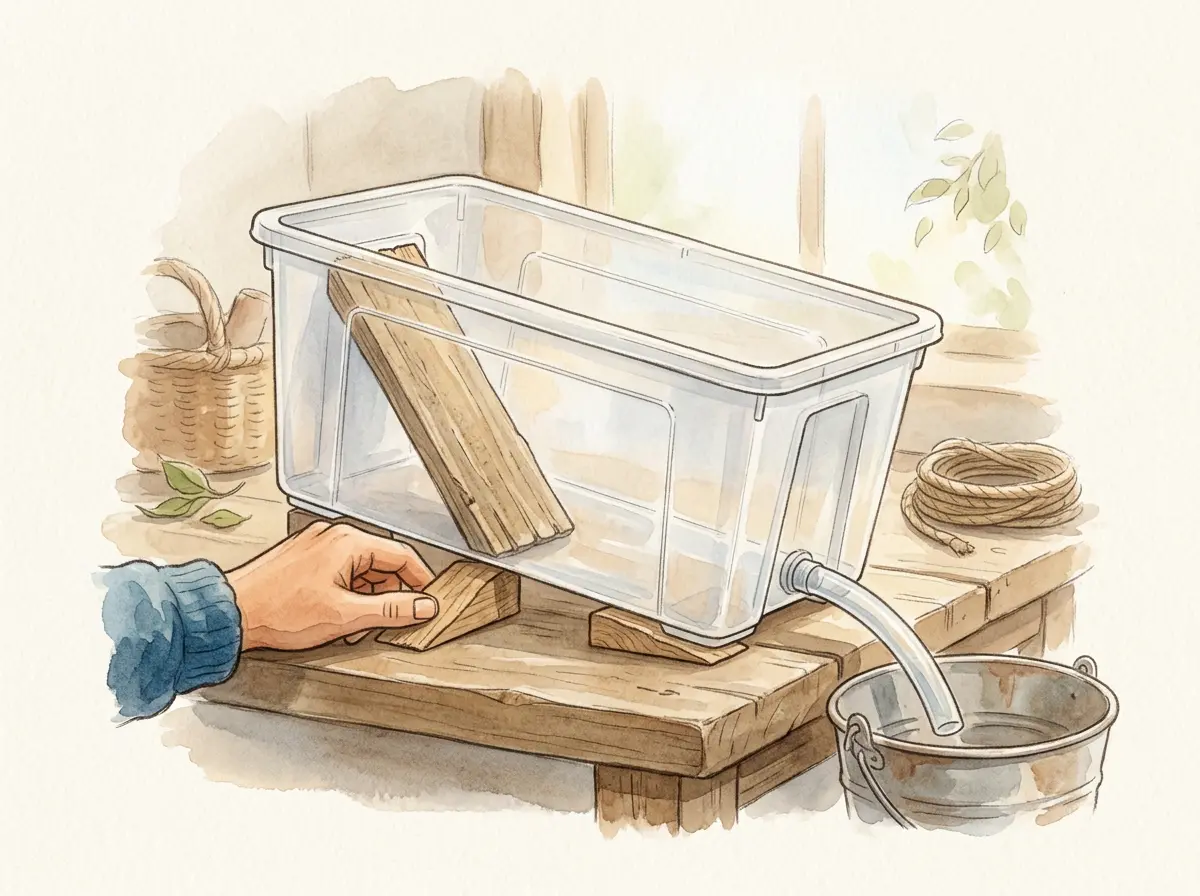
Raise one end by about 15 cm (5.9 in), which gives a slope of about 15°: the liquid drains to the low end, where you can drill an outlet hole or put in an absorbent sponge. The higher, drier area is for the larvae to pupate in. Fit the ramp from the middle towards the outer tub.
Step 2: Add the larvae and close it with mesh
2

Add the larvae and close it with mesh

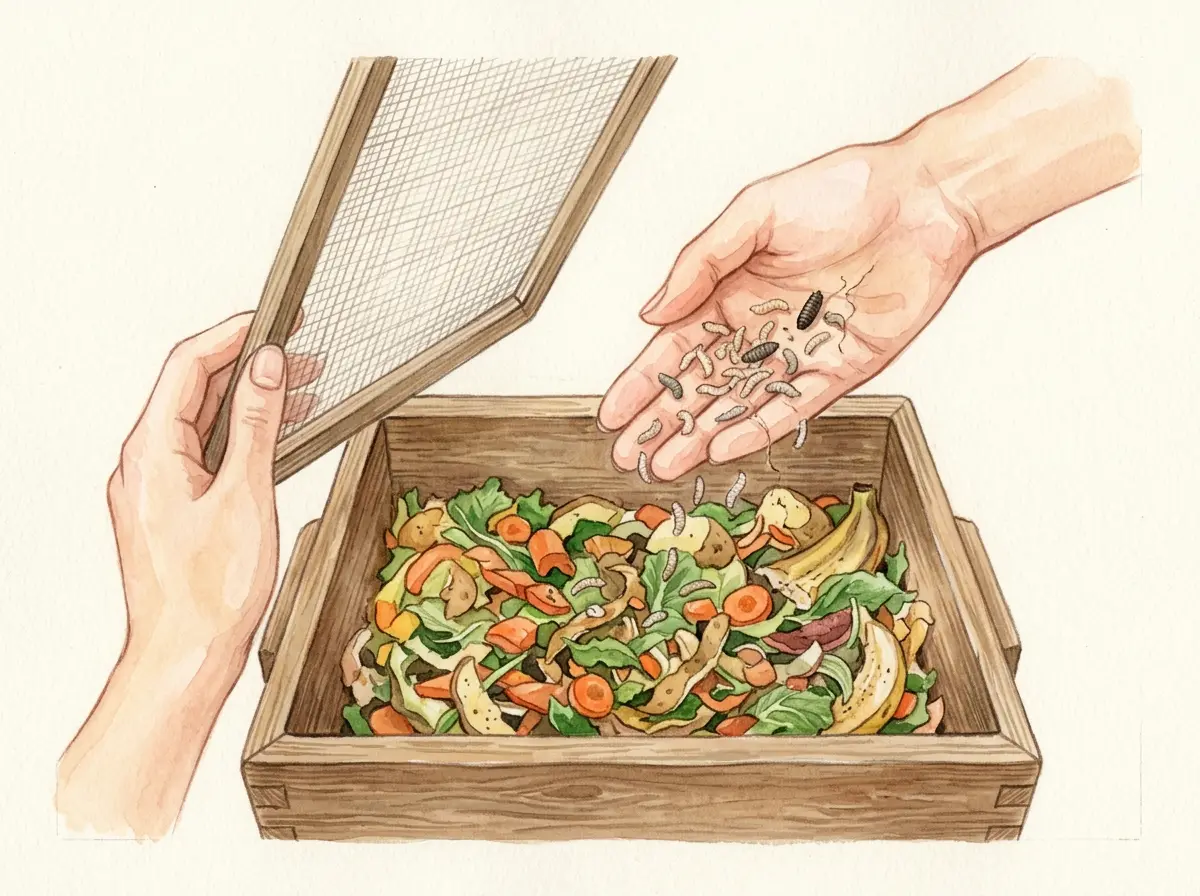
Mix 5 cm (2 in) of chopped vegetable scraps with the bought larvae. The ideal temperature is 27-32 °C (81–90 °F); place it in the shade, because direct sun overheats the box and can be fatal to the larvae. Do not add meat or fish: they give off bad smells and, if you are going to feed the larvae to your birds, they should only eat vegetable matter.

Step 3: Feed in thin layers and keep the smell in check
3

Feed in thin layers and keep the smell in check

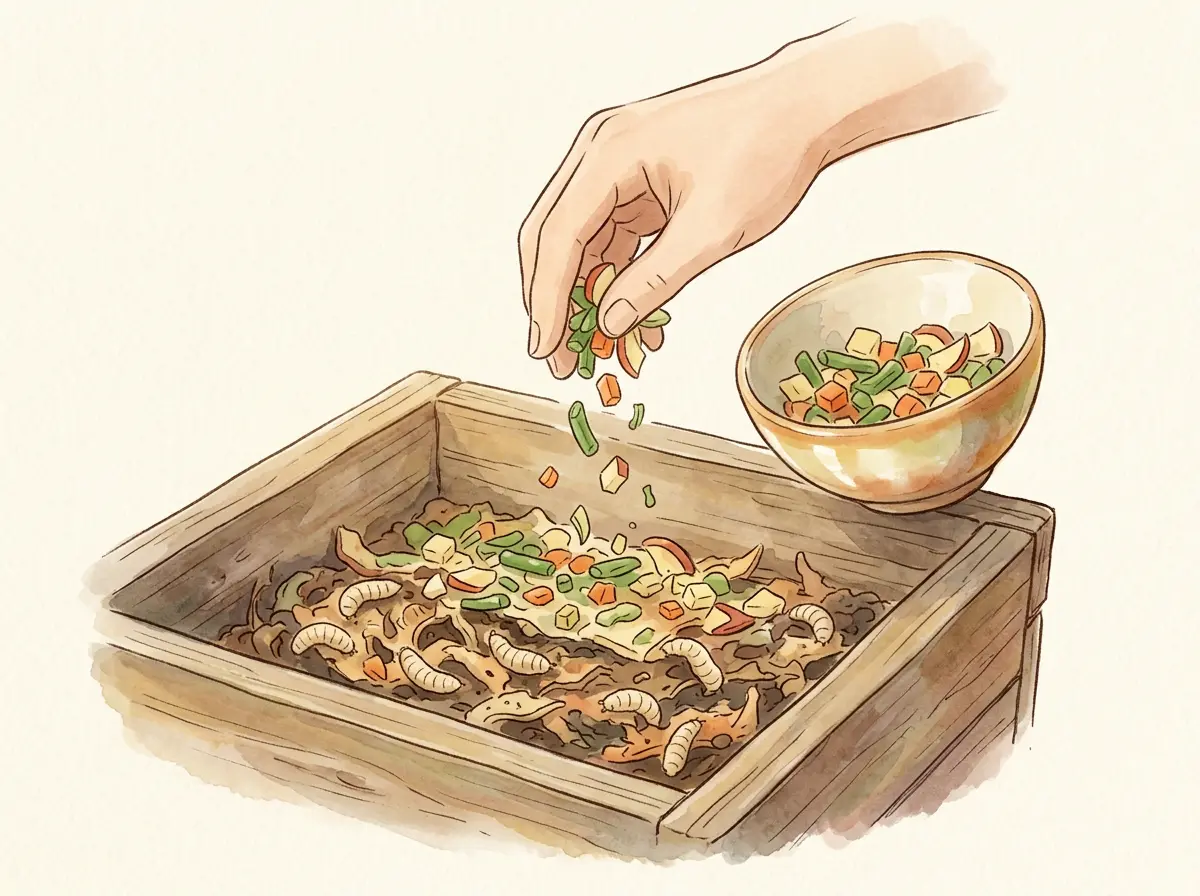
Add scraps every 2-3 days in a thin layer of about 3 cm (1.2 in). A mild fermented smell is normal; if it smells rotten, there is too much protein or standing water, and you need to stop feeding, aerate and remove the excess liquid. Too much protein rots the bedding and attracts flies.

Step 4: Collect the larvae from the tub
4

Collect the larvae from the tub

The mature larvae climb the ramp by themselves and drop into the tub. Collect them every day and freeze or dry them. Leave 10% so the colony carries on. Do not use the liquid that drains off to water vegetables that are eaten raw.

Tips for this build

  • In winter, in cold climates, the larvae need warmth or they stop.
  • Adult soldier flies do not bite and do not usually come into houses.
  • Do not add very salty scraps or pure oil, because they are bad for the larvae.
  • If you are going to feed the larvae to your birds, feed them only on raw vegetable scraps; use larvae raised on kitchen waste, meat or fish only for making compost.
  • If you have neighbours close by, explain that the smell is milder than that of an open compost heap, as long as you manage the moisture and the excess protein well.

A BSF cycle without odours

The larvae eat scraps; the adult barely feeds. Frass is the dry residue, usable as a soil improver.

Good practice: hygiene, shade and not overloading the system

A thin layer of scraps, good drainage and aeration. Avoid waterlogging.

  • Do not add meat or fish if you cannot control the smell (and remember the legal restrictions on the use of the larvae).
  • Separate the pupae if you do not want a mass hatching of adults.

Keep reading

More builds in this category

See all DIY builds