

Painted lady
Vanessa cardui
Also: thistle butterfly, cosmopolitan
Pollinator and long-distance traveller: it arrives every spring from Africa.
The migratory butterfly par excellence: in spring millions arrive from North Africa, and some generations carry on to northern Europe. Its caterpillar lives on thistles, mallows and nettles inside a little silk tent.
What to do: Protect it
Protect it: leave a thistle or mallow in a corner.
Flight months
- Wingspan
- 5-6 cm
- Generations
- Several a year, linked to the migration; in the south it can be seen all year.
- Where it lives
- All over Spain, passing through or breeding; very common in spring.
How long each stage lasts
- Egg
- 3-5 days
- Caterpillar
- 2-3 weeks
- Chrysalis
- 1-2 weeks
- Adult
- 2-4 weeks
How it transforms
It hangs head-down from a silk thread and becomes a greyish-brown chrysalis with golden dots.
The caterpillar, stage by stage
- Young: grey, inside a leaf folded with silk.
- Large: blackish or grey with branched spines and a broken yellow line on each side.
Food plants (for the caterpillar)
 ThistlesA large thistle with purple flowers and green leaves veined with white, almost like marble.
 MallowA wild plant with mauve-pink flowers striped with darker veins.
 NettleOne of the most useful wild plants.
 ArtichokeAn artichoke with a green head and a cleft at the top, tender and with no choke, good for eating almost raw.
Nectar plants (for the adult)
- ThistlesA large thistle with purple flowers and green leaves veined with white, almost like marble.
 LavenderA Mediterranean aromatic shrub with blue-violet spikes much loved by bees, indispensable in dry gardens and…
 Buddleia (butterfly bush)A vigorous shrub with highly fragrant flower spikes that attract butterflies and bees all summer long.
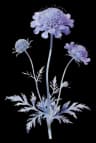 ScabiousA perennial with pincushion-like flowers on long, slender stems, a magnet for butterflies.
 White cloverA low-growing legume that covers the ground all year round and fixes nitrogen, so it works in paths between…
How to recognise it at every stage
PollinatorPollinator and long-distance traveller: it arrives every spring from Africa.
Life cycle: Quick, complete metamorphosis: egg (3-5 days), caterpillar (2-3 weeks), chrysalis (1-2 weeks) and butterfly. Several generations a year linked to the migration.
Tap a stage to see it full size. The photos are AI reference images checked against real photographs; stages without a reliable photo are shown as text only.
Life-stage calendar
| Jan | Feb | Mar | Apr | May | Jun | Jul | Aug | Sep | Oct | Nov | Dec | |
|---|---|---|---|---|---|---|---|---|---|---|---|---|
| Egg | ||||||||||||
| Caterpillar | ||||||||||||
| Chrysalis | ||||||||||||
| Butterfly |
Approximate months for mainland Spain; in cold areas they start later and in warm areas they last longer. Garden creatures this month
- 1Protect it
Egg
· 0.6 mmPale green, barrel-shaped with vertical ribs.
- Where to find it
- On the upper side of thistle, mallow and nettle leaves.
- When: Mar–Oct
- What to do
- Leave it.
- 2Protect it
Caterpillar
· Up to 4 cmBlackish or grey with branched spines and a broken yellow line on each side; it lives in a little silk tent.
- Where to find it
- On thistles, mallows, artichokes and nettles.
- When: Apr–Oct
- What to do
- Protect it: leave a thistle or mallow in a corner.
- 3Protect it
Chrysalis
· 2.5 cmGreyish brown with golden dots, hanging head-down.
- Where to find it
- On the plant or on nearby stems.
- When: Apr–Oct
- What to do
- Do not touch it.
- 4Protect it
Butterfly
· 5-6 cmPinkish orange with black spots and black tips with white spots.
- Where to find it
- On thistles, lavender and buddleia; sometimes in great migratory waves.
- When: Mar–Nov
- What to do
- Nectar flowers from spring to autumn.
- Often confused with
- Red admiral. The admiral is black with red bands, not orange with spots. See profile
Often confused with
- Red admiral. The admiral is black with red bands, not orange with spots. See profile