
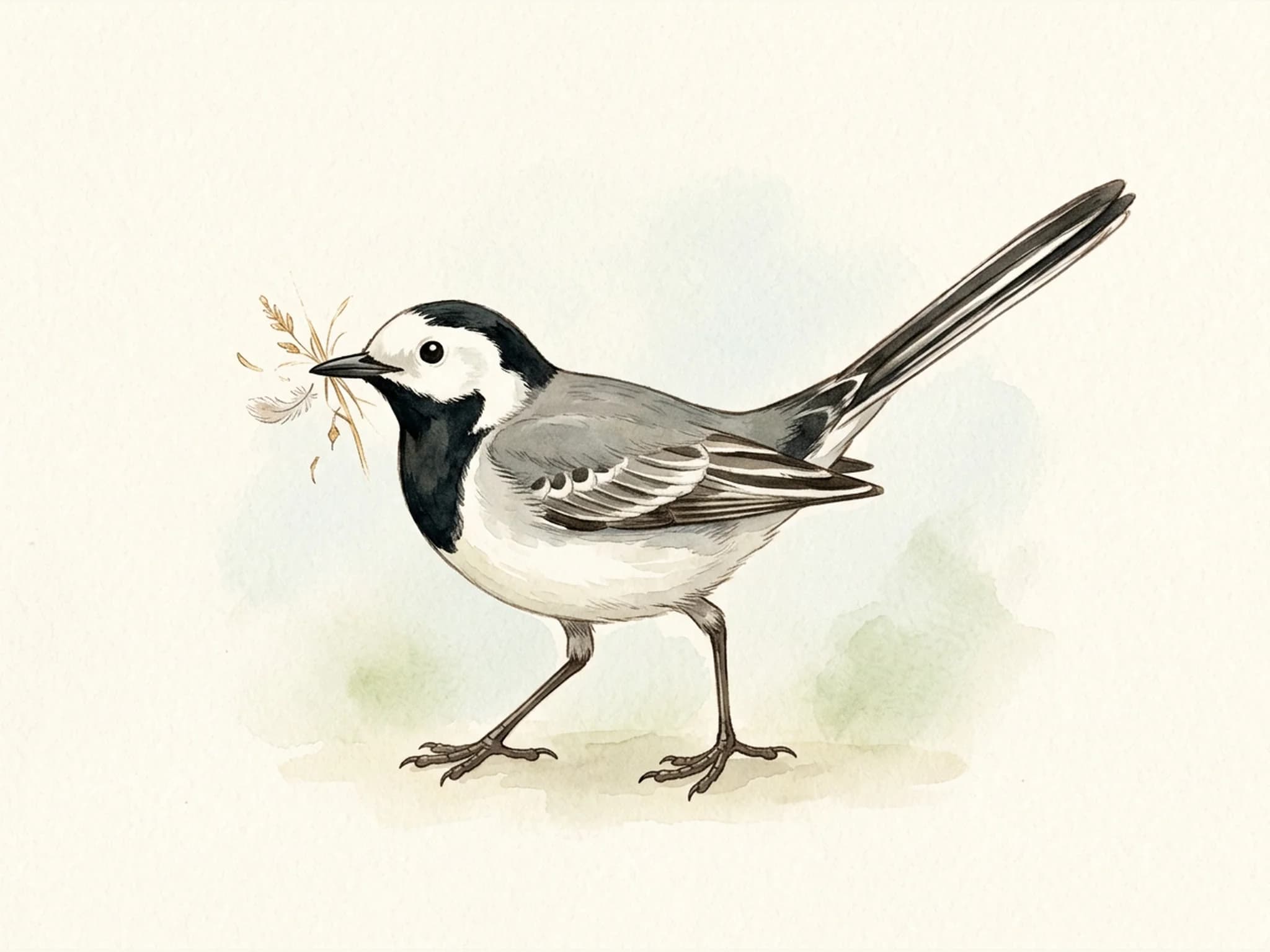
White wagtail
Motacilla alba
Also called: wagtail, pied wagtail
It hunts insects on foot beside irrigation and puddles: a cheerful, nimble ally.
Elegant and long-tailed, it walks quickly, bobbing its tail up and down. It is seen beside ponds, irrigation channels and gardens.
Months when you can see it
How it helps in the garden
It hunts on foot flies, mosquitoes, aphids and small caterpillars near the ground and the water.
How to recognise it
- Size
- Small: 18 cm and 20–25 g.
- Colours
- White face, black bib, grey and white body, long black tail with white edges.
- Song
- A short, high-pitched “chisic”, often in undulating flight.
What it eats through the year
Spring
Flies, mosquitoes and small beetles.
Summer
Insects from damp areas and crops.
Autumn
Insects and small invertebrates; some seeds.
Winter
Invertebrates from the ground and water edges; more common in the south.
Breeding
- When
- From April to August.
- Broods
- 2 (sometimes 3).
- Eggs
- 4–6 greyish eggs with speckles.
Which nest it uses
A cup of grass in holes in walls, woodpiles or stones, sheds and open-fronted boxes with a wide opening.
Its nest box · entrance
Wide rectangular opening
- Inner base
- 130 × 130 mm
- Placement
- 1.5–3 m, near water
- Orientation
- E–SE
How to attract it
Plants
Short meadow with bare patches and puddles; low plants beside the water.
Water
A shallow puddle or a pond with a gently sloping edge.
Shelter
Stone walls, woodpiles and ledges.
Nest box
Special wagtail box (wide rectangular opening), at 1.5–3 m near water.
What to avoid
Letting cats roam beside puddles and low walls
The wagtail hunts and nests at ground level, and is easily caught there.
Spraying insecticides on ponds and ditches
They wipe out the mosquitoes and larvae at the edge, which are its food.
Cementing over every hole in the wall
You take away the places where it makes its nest.
Moving firewood or stones in spring
It may have its nest hidden among them and you would destroy it.