
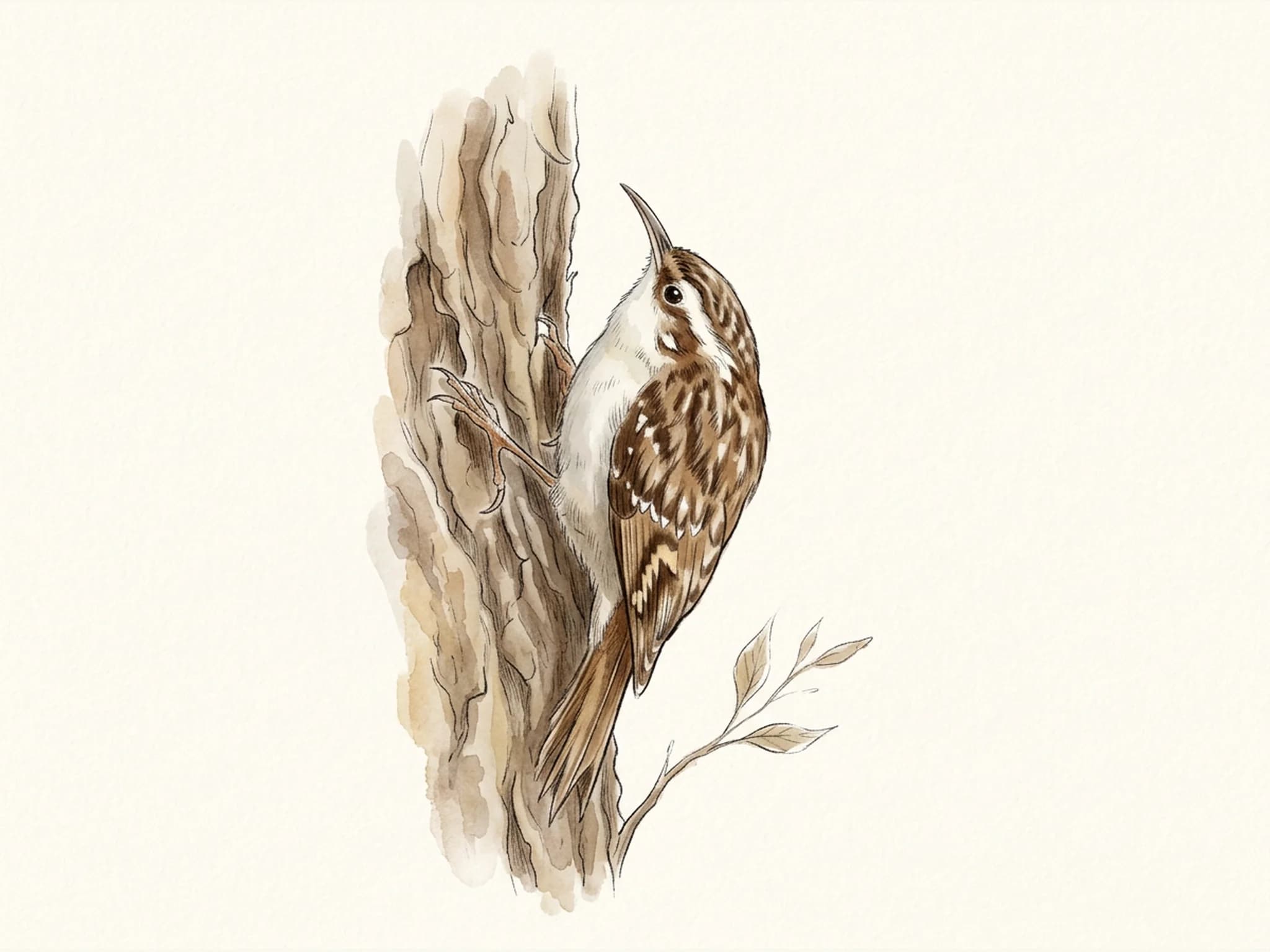
Short-toed treecreeper
Certhia brachydactyla
Also called: treecreeper, bark creeper
It combs the trunks of your fruit trees for hidden larvae and eggs.
Small and discreet, it climbs trunks in a spiral with its tail propped against the bark, like a little mouse. It is a good watcher of old trees.
Months when you can see it
How it helps in the garden
It picks spiders, larvae, insect eggs and overwintering aphids out of the cracks in the bark, where other birds cannot reach.
How to recognise it
- Size
- Very small: 12 cm and 8–11 g.
- Colours
- Mottled brown back that camouflages it on the bark, white belly, thin bill curved downwards.
- Song
- A very high-pitched “tsi” and a short descending trill; easier to hear than to see.
What it eats through the year
Spring
Spiders, larvae and small insects from the bark.
Summer
Insects and spiders; it feeds the chicks small larvae.
Autumn
Bark insects and a few seeds.
Winter
Overwintering eggs and larvae; at the feeder it accepts fat or nut paste smeared on the trunk.
Breeding
- When
- From March to July.
- Broods
- 1–2.
- Eggs
- 5–7 white eggs with reddish dots.
Which nest it uses
A cup of twigs and fibres hidden behind a piece of loose bark or in a crack; special flat boxes with a side entrance exist.
How to attract it
Plants
Mature trees with rough bark (pine, olive, holm oak, old fruit trees) and dead trunks left standing.
Water
It does not need much: a drinking dish next to the trees.
Shelter
Leave old trees, trunks with loose bark and a stump or two.
Nest box
Special treecreeper box (flat nest behind the bark). See “Other nests” in the nest box guide.


What to avoid
Felling old trees or stripping their loose bark
It is where it looks for insects and where it nests, behind the plates of bark.
Painting or sealing trunks with chemical products
They block the cracks where the insects it eats hide, and can poison it.
Spraying insecticide on the trunk
It wipes out the larvae and spiders in the bark that are its food, and leaves it with nothing to search for.
Letting cats or rats prowl the base of trees with a nest
The nest is low, behind the bark, and they reach it easily.