
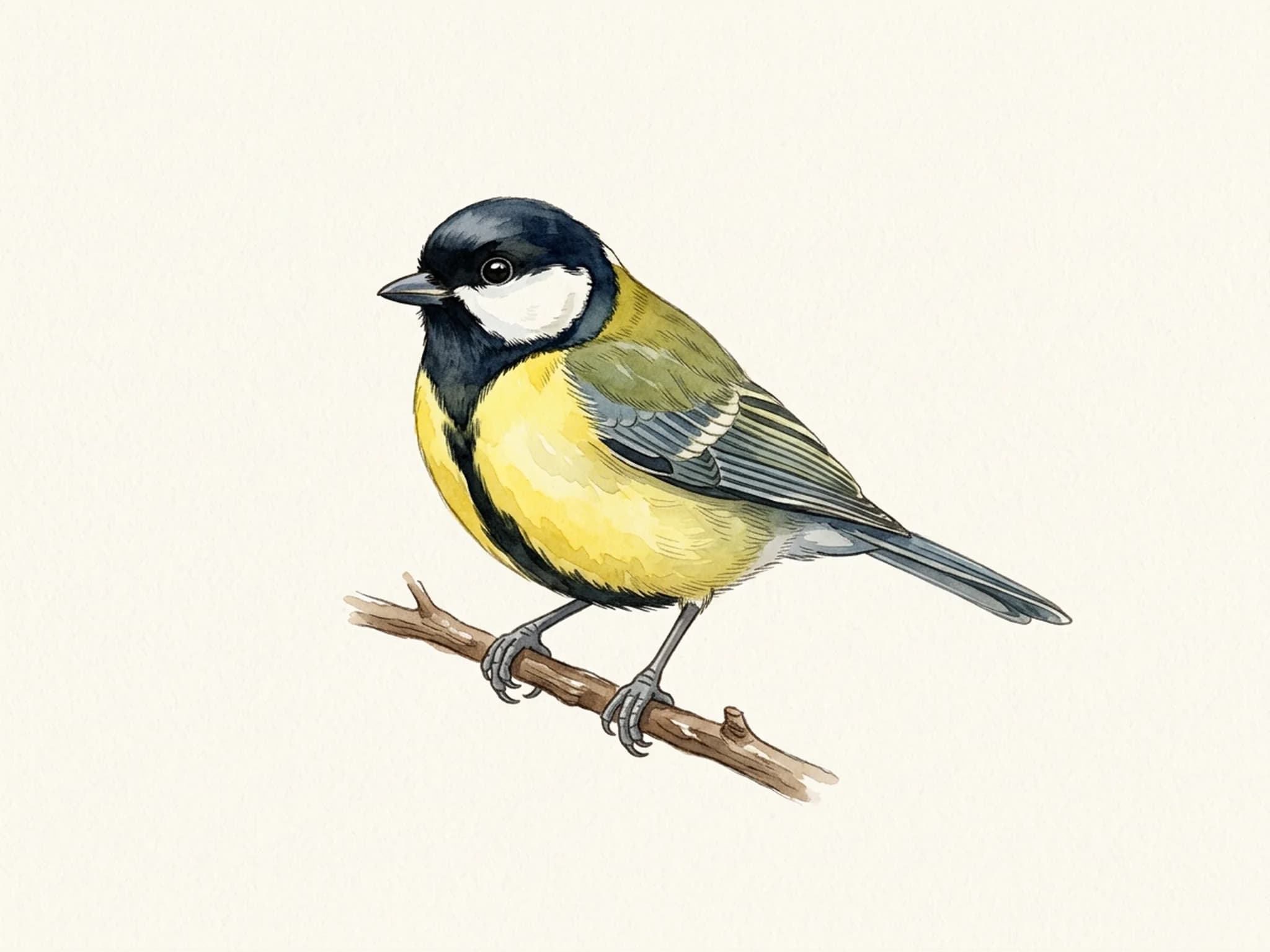
Great tit
Parus major
Also called: great titmouse, tit with the necktie
The great caterpillar-eater: rearing one brood takes thousands of beakfuls.
Bigger than the blue tit, with a black necktie that gives it away. It visits vegetable gardens, parks and gardens all year round and is very faithful to nest boxes.
Months when you can see it
How it helps in the garden
It eats caterpillars, aphids and mosquitoes at a steady rate; in spring each chick receives dozens of caterpillars a day. In winter it checks bark and trunks for eggs and chrysalises.
How to recognise it
- Size
- Small: 14 cm and 16–20 g.
- Colours
- Glossy black head with white cheeks, yellow breast with a black stripe down the middle (wider in the male), greenish back, blue-grey wings.
- Song
- A repeated “ti-chu ti-chu”, like a squeaky bicycle; it has a huge repertoire.
What it eats through the year
Spring
Green, hairy caterpillars, small beetles and spiders.
Summer
Insects and larvae; the young learn to hunt in your crops.
Autumn
Seeds, nuts, berries and insects.
Winter
Sunflower seeds, unsalted peanuts, fat and whatever it finds under the bark.
Breeding
- When
- From April to July.
- Broods
- 1 brood; a second in warm areas if caterpillars are plentiful.
- Eggs
- 6–12 white eggs with small reddish spots.
Which nest it uses
A cup of moss, hair and feathers in a hole: tree, wall or hole nest box.
Its nest box · entrance
Ø 32 mm
- Inner base
- 130 × 130 mm
- Placement
- 2–4 m
- Orientation
- NE–E–SE
How to attract it
Plants
Oaks, holm oaks, hazels and fruit trees; a soil with leaf litter and wild corners where caterpillars live.
Water
A quiet, shallow drinking dish; it enjoys a bath in summer.
Shelter
Trees with low branches and hedges near the box for the chicks’ first flights.
Nest box
Hole box with a 32 mm entrance (28–32), at 2–4 m, facing NE–SE.
Plants from the catalogue it likes
 RosemaryA Mediterranean shrub that is very tough once established.
 ThymePerennial thyme for poor, dry soil, ideal for sunny borders.
 Nettle (a corner for insects)One of the most useful wild plants.
 Holm oakA long-lived, slow-growing evergreen tree, the emblem of Mediterranean woodland and the dehesa (the open oak…
 HazelA hazel grown as a hedge or multi-stemmed bush, bearing hazelnuts in autumn.
What to avoid
Hanging the box near branches a cat can climb
They reach the hole and catch the adults and the chicks.
Spraying insecticide in spring
The chicks eat almost nothing but caterpillars, and without them the brood goes hungry or dies.
Leaving panes of glass unmarked
They mistake the reflection for sky and crash into it. A few silhouettes or hanging cords warn them there is an obstacle.
Giving them salted or mouldy peanuts, or leaving the feeder dirty
Salt does them harm, peanut mould is toxic and fungi and bacteria grow in accumulated leftovers and spread disease among birds.