
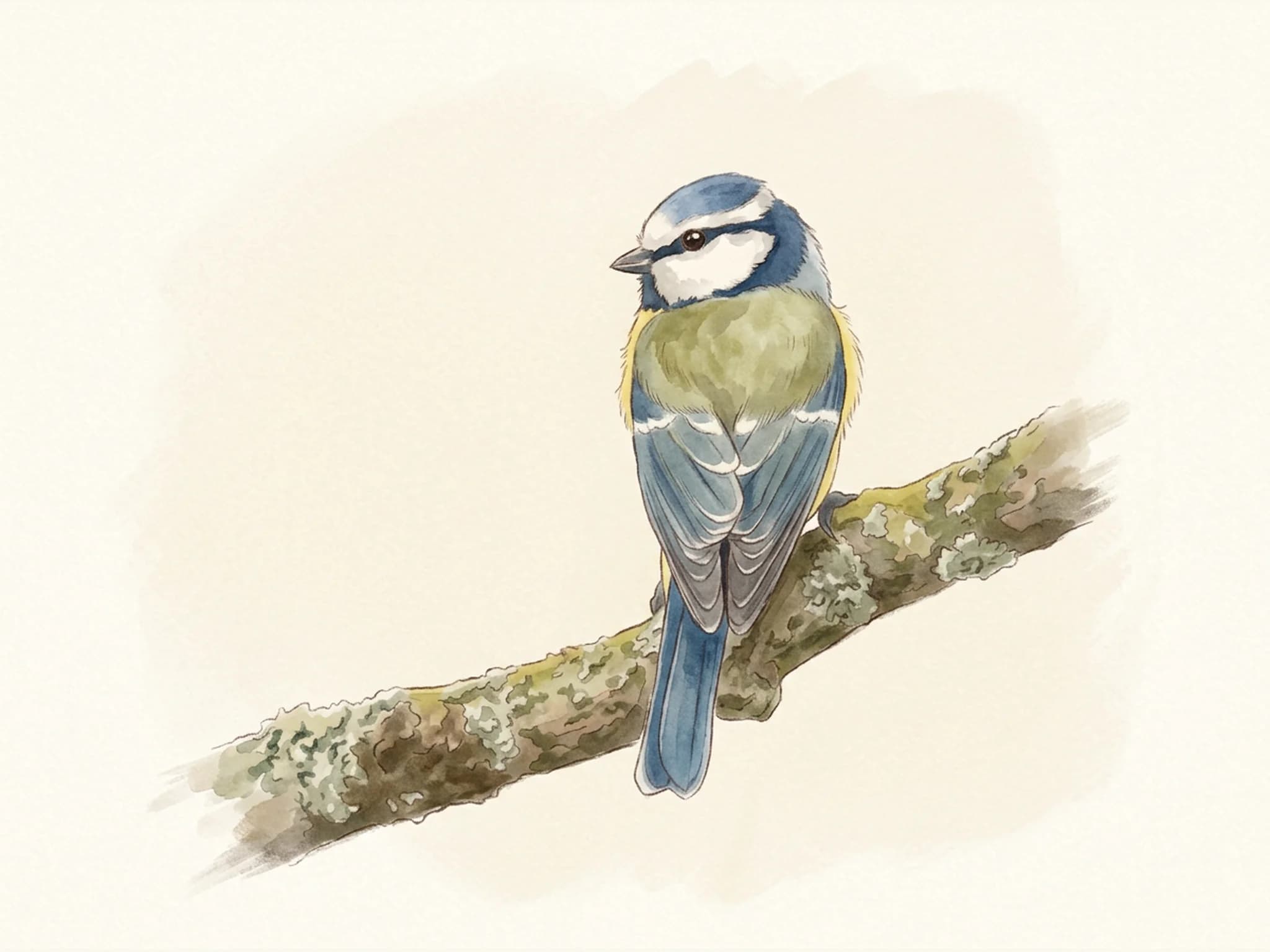
Eurasian blue tit
Cyanistes caeruleus
Also called: blue tit, blue titmouse
A pair with chicks collects hundreds of caterpillars a day in your fruit trees.
A tiny blue and yellow acrobat that checks branches leaf by leaf for caterpillars, aphids and insect eggs. It is the most grateful tenant of nest boxes.
Months when you can see it
How it helps in the garden
It is one of the best allies against caterpillars on fruit trees and vegetables: at the height of breeding a pair can bring more than 400 prey items a day to the nest. In winter it also checks the bark for aphid eggs.
How to recognise it
- Size
- Very small: about 11–12 cm and 9–12 g (like a light walnut).
- Colours
- Blue cap, white cheeks with a dark line through the eye, yellow breast, bluish wings and tail.
- Song
- A high-pitched “tsi-tsi-tsiiiu” and a quick trill; chicks make a constant buzzing inside the box.
What it eats through the year
Spring
Small caterpillars, aphids and spiders, mostly for the chicks.
Summer
Insects, larvae and spiders; some soft fruit.
Autumn
Insects on the branches, seeds and small berries.
Winter
Eggs and larvae under the bark, seeds, unsalted peanuts and fat balls at the feeder.
Breeding
- When
- From April to June (March in the south).
- Broods
- Normally 1 brood; in warm areas sometimes a second.
- Eggs
- 7–12 white eggs with reddish speckles.
Which nest it uses
A soft cup of moss, hair and feathers in a hole: a tree hollow, a crack in a wall or, very often, a nest box.
Its nest box · entrance
Ø 26–28 mm
- Inner base
- 120 × 120 mm
- Placement
- 2–4 m
- Orientation
- NE–E–SE
How to attract it
Plants
Native trees and shrubs where caterpillars live (oaks, holm oaks, untreated fruit trees), mixed hedges and flowers that attract insects.
Water
A shallow drinking dish (2–3 cm) in the shade, with a stone to perch on, cleaned every few days.
Shelter
Dense hedges and an unpruned corner with leaf litter and logs.
Nest box
Hole box with a 26–28 mm entrance, at 2–4 m, facing NE–SE. See the nest box guide.
Plants from the catalogue it likes
 RosemaryA Mediterranean shrub that is very tough once established.
 LavenderA Mediterranean aromatic shrub with blue-violet spikes much loved by bees, indispensable in dry gardens and…
 Nettle (a corner for insects)One of the most useful wild plants.
 Holm oakA long-lived, slow-growing evergreen tree, the emblem of Mediterranean woodland and the dehesa (the open oak…
What to avoid
Leaving the box within reach of cats
They climb nearby branches and walls and pull the chicks out through the hole. Hang it on a smooth trunk or a pole, away from branches they can use as a ladder.
Using insecticides and herbicides
They wipe out the caterpillars and aphids it feeds on, and any prey that survives poisoned ends up making the chicks ill.
Leaving large panes of glass unmarked
The bird sees the sky or garden reflected, flies into it and is hurt. Stick on silhouettes or hang curtains of cords so it can see there is something solid.
Opening the box in the middle of breeding
The parents get frightened and may abandon the eggs or chicks. Clean it only in autumn or winter, when it is empty.