
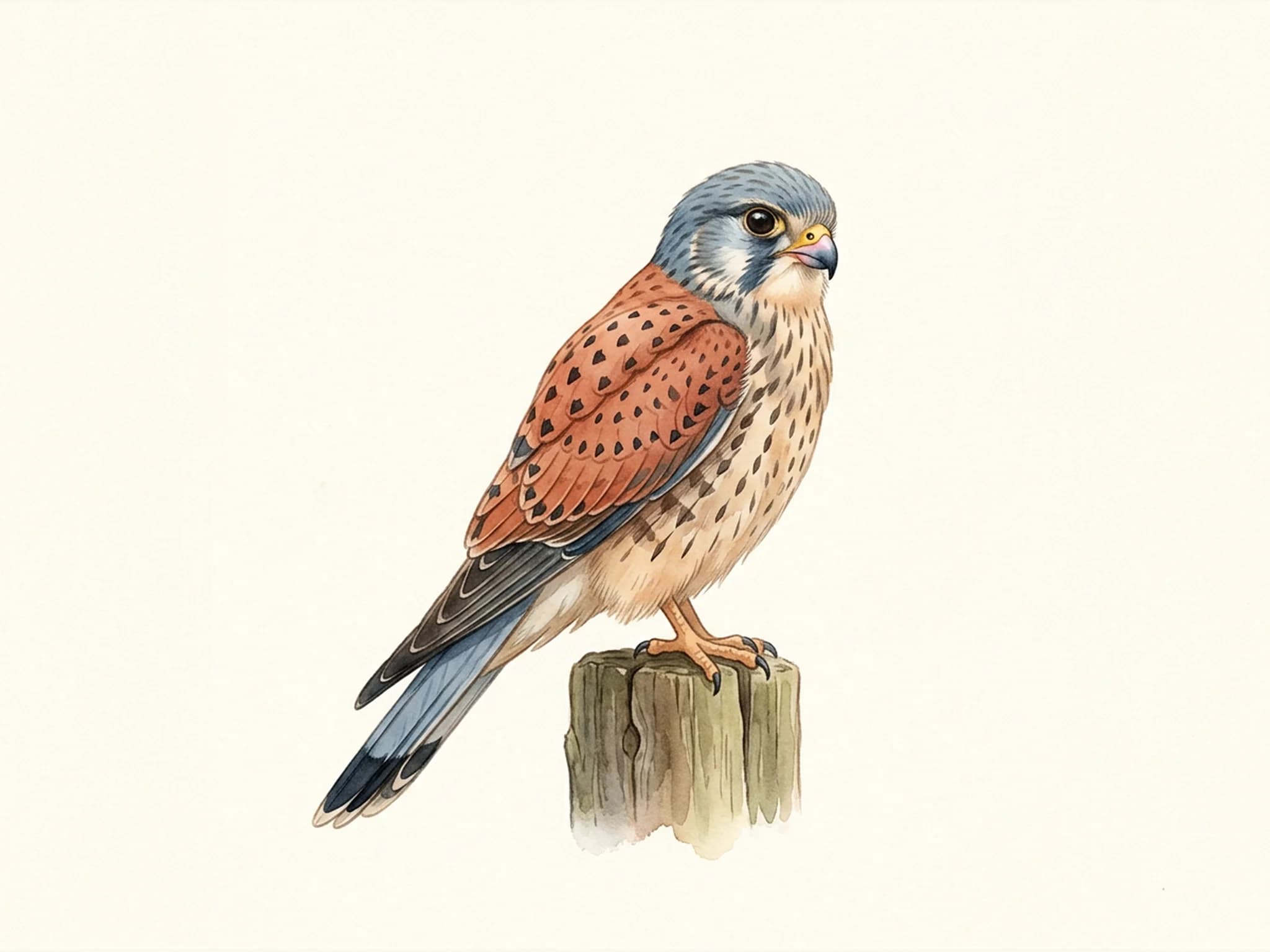
Common kestrel
Falco tinnunculus
Also called: kestrel, European kestrel
It watches from above: it hovers over the field and finds voles and grasshoppers.
A small falcon that stays motionless in the air beating its wings. It lives in villages, fields and gardens with field margins.
Months when you can see it
How it helps in the garden
It eats voles, mice, grasshoppers and large insects, mostly in crops and field margins.
How to recognise it
- Size
- Medium: 32–39 cm, 65–80 cm wingspan and 150–250 g.
- Colours
- Male with a grey head, reddish back with black spots and a grey tail with a black band; female reddish brown, streaked.
- Song
- A quick, high-pitched “kli-kli-kli”.
What it eats through the year
Spring
Voles, mice and large insects.
Summer
Grasshoppers, crickets and some small lizards.
Autumn
Rodents and beetles.
Winter
Voles, mice and small birds.
Breeding
- When
- From April to June.
- Broods
- 1.
- Eggs
- 3–6 cream eggs with reddish spots.
Which nest it uses
Cornices, holes in buildings and cliffs, old nests of other birds, and large open boxes. It builds no nest.
Its nest box · entrance
Open at the front
- Inner base
- 380 × 280 mm
- Placement
- 4.5–6 m or more, on a pole, tree or wall
- Orientation
- E–SE
How to attract it
Plants
Field margins with tall grass and meadows so there are voles; posts to perch on.
Water
It does not usually need a drinking dish.
Shelter
Old buildings, tall posts and isolated trees.
Nest box
Kestrel box open at the front, at 4.5–6 m on a pole, tree or wall.
What to avoid
Using rodenticides
The poison passes from the mouse to the kestrel that eats it.
Leaving power lines unprotected
It perches on them to look out and is electrocuted when it touches two wires.
Closing the holes in cornices and towers
They are its breeding sites in villages.
Going close to the box while it breeds
If the pair feels watched, it may abandon the eggs.