
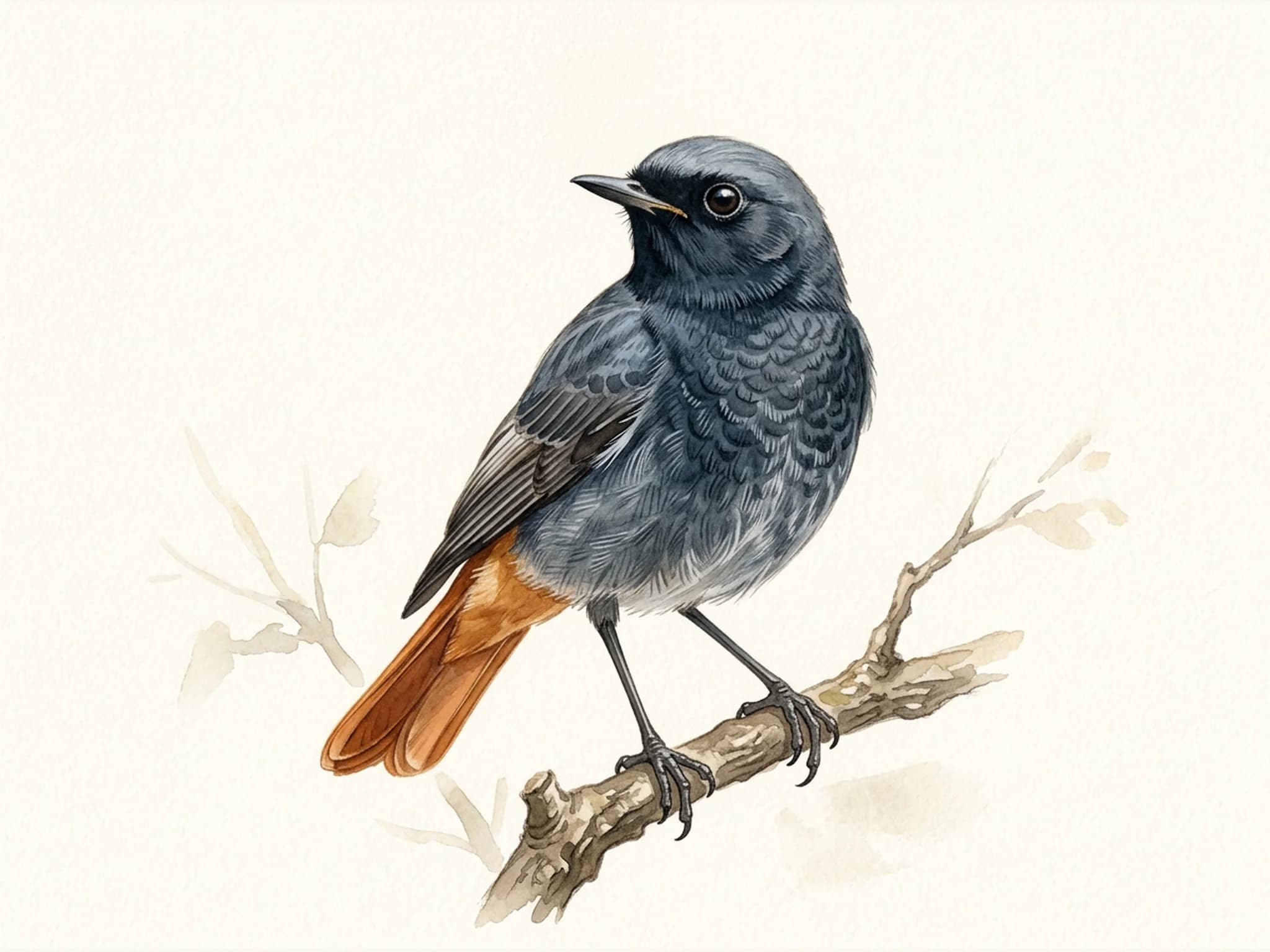
Black redstart
Phoenicurus ochruros
Also called: redstart, black redtail
It perches on roofs and beds and catches flies and small insects in flight.
A bird of walls and roofs that constantly shivers its orange tail. In gardens with stone sheds or old walls it settles in easily.
Months when you can see it
How it helps in the garden
It catches flies, mosquitoes, beetles and small caterpillars, both in flight and on the ground.
How to recognise it
- Size
- Small: 13–15 cm and 14–18 g.
- Colours
- The male is dark grey, almost black, with an orange-red tail; the female is greyish brown with the same tail.
- Song
- A short, rasping warble, like a “crunch”, followed by a whistle; it sings from rooftops at dawn.
What it eats through the year
Spring
Flies, mosquitoes, caterpillars and spiders.
Summer
Insects and larvae; small grasshoppers.
Autumn
Insects and elderberries or blackberries.
Winter
Small invertebrates and berries; it spends the winter in the south and on the coast.
Breeding
- When
- From April to August.
- Broods
- 2, sometimes 3.
- Eggs
- 4–6 white eggs.
Which nest it uses
A cup of grass and hair on ledges, cornices, holes in walls or sheds; it accepts open-fronted boxes.
Its nest box · entrance
Open front
- Inner base
- 130 × 130 mm
- Placement
- 2–3 m, under an eave
- Orientation
- N–E
How to attract it
Plants
A corner of wild plants for insects and a low hedge near the walls.
Water
A shallow drinking dish and a little puddle in summer.
Shelter
Holes in stone walls, ledges under the eaves and piles of stones.
Nest box
Open-fronted box at 2–3 m, under an eave or on a sheltered wall, facing N–E.


What to avoid
Sealing holes in walls and cornices with silicone in spring
That is where it nests, and you could trap a nest with eggs or chicks inside.
Letting cats prowl roofs and low walls
Those are the places where it perches and breeds, and it is easily caught there.
Spraying insecticide on walls and sheds
That is exactly where it hunts spiders and insects, so it is left without food or eats poisoned prey.
Opening the box during the breeding season
The parents may abandon the brood because of the disturbance. Check it only in autumn or winter.