
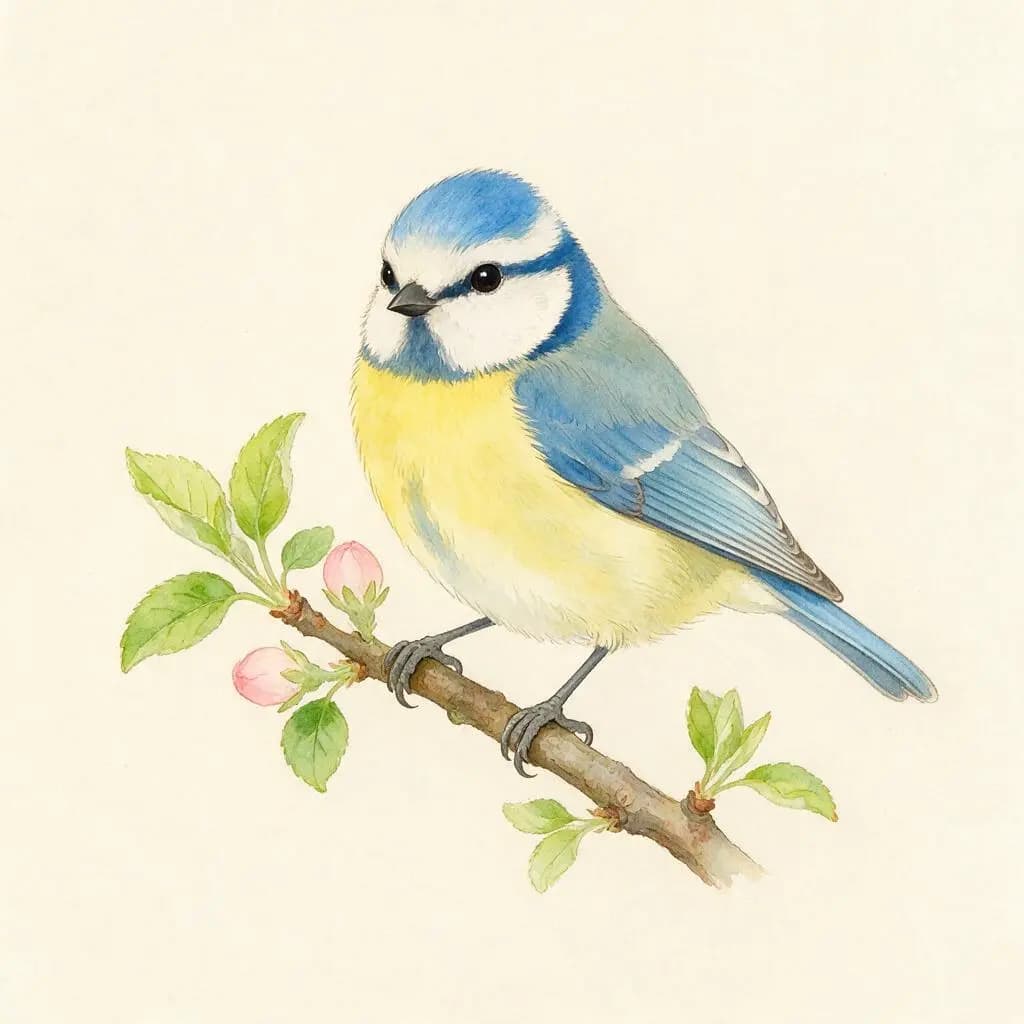
Blue tit and great tit
Cyanistes caeruleus, Parus major
Also called: Parus caeruleus, Cyanistes, Eurasian blue tit, insect-eating birds, tits
Small insect-eating birds that feed their chicks on caterpillars during the breeding season. A single family can eat thousands of caterpillars and insects in a season. They are very useful in the biological control of fruit trees.

How to recognise it at every stage
Garden allyGarden ally: each brood eats thousands of caterpillars and aphids.
Life cycle: Bird: one big clutch in spring (8-12 eggs) in a hole; the chicks fly at three weeks, just when there are most caterpillars. One or two broods a year.
Tap a stage to see it full size. The photos are AI reference images checked against real photographs; stages without a reliable photo are shown as text only.
Life-stage calendar
| Jan | Feb | Mar | Apr | May | Jun | Jul | Aug | Sep | Oct | Nov | Dec | |
|---|---|---|---|---|---|---|---|---|---|---|---|---|
| Eggs | ||||||||||||
| Chicks | ||||||||||||
| Adult | ||||||||||||
| Nest box |
Approximate months for mainland Spain; in cold areas they start later and in warm areas they last longer. Garden creatures this month
- 1Protect it
Eggs
· 1.5 cmWhite with little reddish dots, in a soft nest of moss and feathers.
- Where to find it
- In holes in trees, walls and nest boxes with a small entrance (26-28 mm).
- When: Mar–May
- What to do
- Do not open the nest box in spring; clean it in autumn.
- 2Protect it
Chicks
Chicks with a yellow mouth, naked at first and then with dull feathers; on leaving the nest, paler than the adults.
- Where to find it
- Inside the nest and, once out, in nearby trees.
- When: Apr–Jun
- What to do
- No insecticides in spring: their parents are looking for caterpillars for them.
- 3Protect it
Adult
· 11-14 cmBlue tit: blue cap, white face, yellow breast. Great tit: black head with white cheeks and a black stripe down the yellow breast.
- Where to find it
- In fruit trees, hedges and feeders.
- When: all year
- What to do
- Put up nest boxes in winter and a feeder in the cold months. In pines, they help against the processionary.
- Often confused with
- Sparrow. Brown, with no yellow or blue, and more of a seed-eater than a caterpillar-eater.
Nests, egg clutches and shelters
- Protect it
Nest box
A wooden box with a small round hole in the front.
- Where to find it
- On a trunk or wall at 2-4 m, with the entrance away from the afternoon sun and the wind.
- When: Jan–Jun
- What to do
- Put it up before February; if it is not occupied within a year, move it.
Often confused with
- Sparrow. Brown, with no yellow or blue, and more of a seed-eater than a caterpillar-eater.
What it eats
- Caterpillars of all kinds (processionary, gypsy moth, cabbage white)
- Aphids and scale insects in spring
- Seeds and berries in winter
How it helps in the garden
How to attract this ally to your garden
- Nest boxes with a 28 mm hole (blue tit) and 32 mm (great tit), hung 3-4 m above the ground, facing east.
- Clean drinking water all year round, especially in summer.
- Put out a winter feeder with sunflower seeds and fat balls only from October to March, when natural food is scarce.
- Native hedges and shrubs: they give shelter from cats and birds of prey, and the birds find caterpillars and berries in them.
What to avoid so you do not harm it by accident
- Broad-spectrum insecticides in spring: they kill the caterpillars the parents feed to their chicks, and the brood can go hungry.
- Nest boxes with an entrance hole that is too big: predators get in.
How to recognise it
Blue tit: 11 cm, blue cap and white face. Great tit: 14 cm, black stripe down the breast, white cheeks and black hood.
Risk to people: None.
Many allies are protected by Spanish law: do not capture or keep in captivity toads, hedgehogs, bats or native reptiles. Attract them, watch them and thank them from a distance. Rules in other countries differ: check your local regulations.

Allies do better if the garden is varied. Learn to identify each visitor and to prevent problems with good habits.