
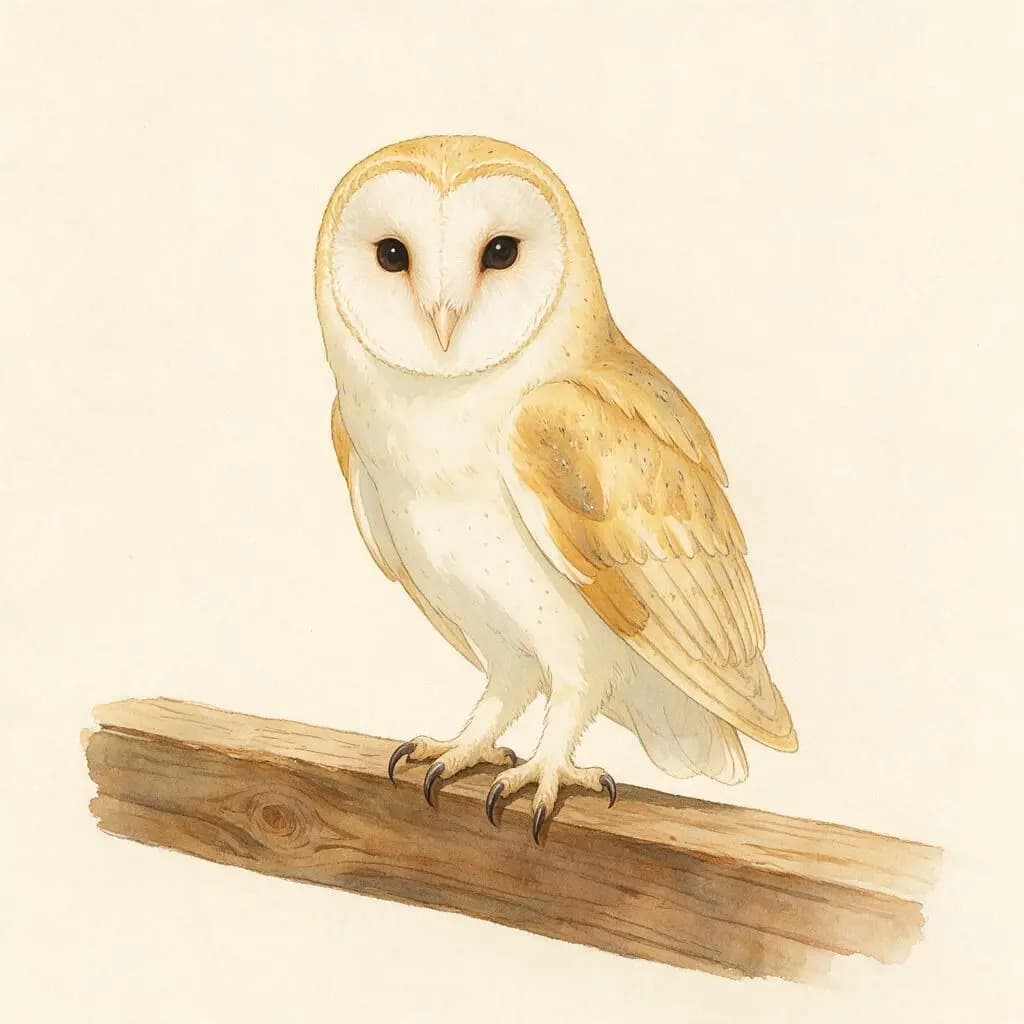
Barn owl and little owl
Tyto alba, Athene noctua
Also called: owl, Tyto alba, Athene noctua, night raptors, barn owl
Night-time birds of prey that feed mainly on rodents. A pair of barn owls with a brood can catch thousands of mice and voles a year. They are very useful if rodents are damaging tubers and seedbeds in your garden.

How to recognise it at every stage
Garden allyGarden ally: one family catches thousands of mice and voles a year.
Life cycle: Night bird: it lays 4 to 7 eggs in a dark hollow (barns, towers, nest boxes); the chicks hatch at staggered intervals, covered in white down, and fly at two months. One or two broods a year.
Tap a stage to see it full size. The photos are AI reference images checked against real photographs; stages without a reliable photo are shown as text only.
Life-stage calendar
| Jan | Feb | Mar | Apr | May | Jun | Jul | Aug | Sep | Oct | Nov | Dec | |
|---|---|---|---|---|---|---|---|---|---|---|---|---|
| Eggs | ||||||||||||
| Chicks | ||||||||||||
| Adult | ||||||||||||
| Owl pellets |
Approximate months for mainland Spain; in cold areas they start later and in warm areas they last longer. Garden creatures this month
- 1Protect it
Eggs
· 4 cmWhite and oval, with no nest, on broken-up owl pellets.
- Where to find it
- In barns, lofts, bell towers and big nest boxes.
- When: Feb–Jul
- What to do
- Do not go into the barn during the breeding season.
- 2Protect it
Chicks
Balls of white down with a heart-shaped face that hiss and wheeze.
- Where to find it
- In the nest.
- When: Mar–Aug
- What to do
- If you find one on the ground, call a wildlife rescue centre.
- 3Protect it
Adult
· 33-39 cmWhite heart-shaped face, golden back with grey flecks and a white belly; silent flight.
- Where to find it
- Hunting at night over fields and gardens.
- When: all year
- What to do
- Protect it: put a nest box in a barn or a tower and do not use poisons for mice.
- Often confused with
- Little owl and tawny owl. The little owl is small, brown and also hunts by day; the tawny owl is greyish brown with black eyes. Both are allies.
Nests, egg clutches and shelters
- Protect it
Owl pellets
Shiny black balls of about 4 cm with fur and tiny mouse bones: they are what it regurgitates.
- Where to find it
- Under its perch in barns, trees or posts.
- When: all year
- What to do
- If you see them, you have an owl nearby. You can open them with gloves to see how many rodents it catches.
Often confused with
- Little owl and tawny owl. The little owl is small, brown and also hunts by day; the tawny owl is greyish brown with black eyes. Both are allies.
Sources
What it eats
- Mice, rats and voles
- Shrews
- Large insects (beetles, grasshoppers)
How it helps in the garden
How to attract this ally to your garden
- Purpose-made nest boxes in barns, churches, ruins or tall buildings, away from roads: they hunt flying low and many are killed by traffic.
- Respect old trees with hollows, where they can breed.
- Avoid second-generation anticoagulant rodenticides: they are poisoned when they eat the poisoned mouse.
What to avoid so you do not harm it by accident
- Anticoagulant rodenticides: they are a major cause of death in barn owls and other raptors.
- Floodlights left on all night near the nest: barn owls hunt in the dark, avoid lit places and may abandon the nest.
How to recognise it
Barn owl: white heart-shaped face, golden plumage above, silent flight. Little owl: 20 cm, speckled brown, also active by day, perches upright on posts.
Risk to people: None.
Many allies are protected by Spanish law: do not capture or keep in captivity toads, hedgehogs, bats or native reptiles. Attract them, watch them and thank them from a distance. Rules in other countries differ: check your local regulations.

Allies do better if the garden is varied. Learn to identify each visitor and to prevent problems with good habits.